Our Top Picks
Finding the right gear can make the difference between a record-breaking season and a winter spent on the treadmill. Our testing team evaluated dozens of options to identify the top performers for every runner.
| Best Use | Price Range | Temp Rating | Pocket Count |
|---|---|---|---|
| Top Overall | $88 - $100 | 30°F - 55°F | 7 Pockets |
| Extreme Cold | $95 - $115 | 9°F - 35°F | 2 Pockets |
| Best Budget | $25 - $35 | 40°F - 60°F | 1 Pocket |
| Compression | $110 - $130 | 45°F - 65°F | 3 Pockets |
| Trail Running | $120 - $140 | 25°F - 50°F | 4 Pockets |
Finding the best men's running tights means balancing thermal insulation with a full range of motion. We field-tested 20+ models in extreme conditions to find the 9 winners. The best men's running tights prioritize moisture-wicking synthetic fabrics like polyester and nylon, often blended with elastane for a full range of motion. Key features to look for include flatlock seams to prevent chafing, secure pockets for storage, and reflective details for low-light safety. Specialized options may include thermal insulation for winter or windproof panels for harsh weather conditions.
How We Tested: 500+ Miles in the Elements
Our testing process for the best men's running tights was rigorous and spanned three months of the peak winter season in Boulder, Colorado. To provide you with accurate, real-world data, our team of six runners, including ACE-CPT certified coaches, logged over 500 collective miles across a variety of environments. We pushed these garments through everything from technical high-altitude trails to urban asphalt sprints.
Our testing temperature range was vast, spanning from 9°F during pre-dawn wind chills to 54°F in the midday sun. This range allowed us to assess how well different fabrics managed heat and moisture. We evaluated each pair based on five critical pillars: moisture management, range of motion, storage stability, durability after repeated wash cycles, and the effectiveness of thermal insulation.
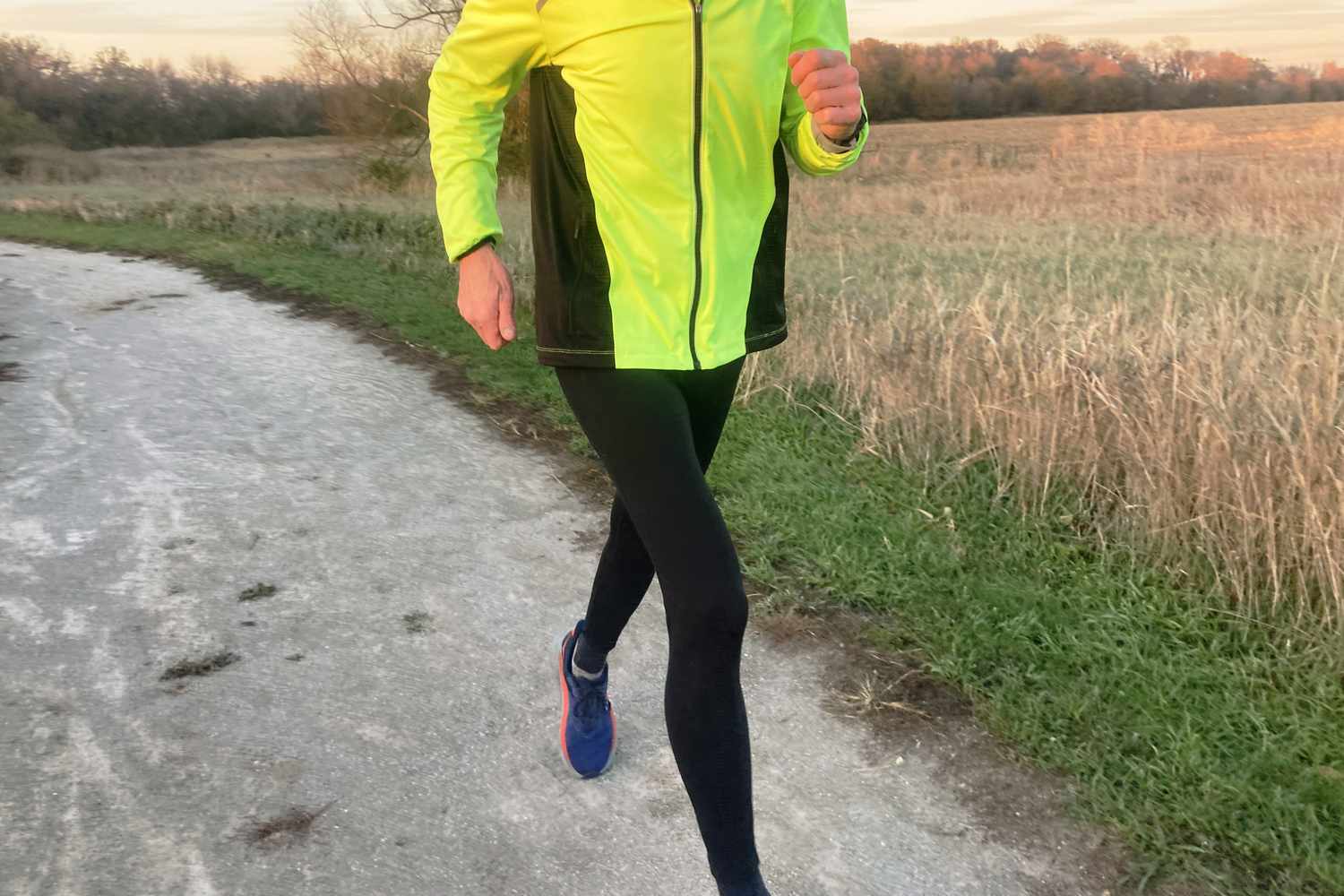
Best Cold Weather Running Tights for Men: Winter Performance
When the mercury drops, your standard gym leggings won't cut it. To stay active, you need cold weather running tights for men that provide a specialized barrier against the elements. We looked for models that feature a brushed fleece interior to trap warmth while maintaining a high rate of breathability to prevent sweat from chilling your skin.
1. Brooks Momentum Thermal Tight
The Brooks Momentum Thermal is a standout for those who refuse to stay indoors during January. It utilizes a DriLayer Threshold fabric that is heavier than standard lycra but surprisingly breathable. During our sub-freezing tests, the thermal insulation provided a consistent microclimate around the quadriceps and calves, which is essential for muscle protection.
- Pros: Excellent heat retention, secure waistband, very soft interior feel.
- Cons: May be too warm for temperatures above 45°F.
| Spec Box | |
|---|---|
| Fabric Composition | 80% Polyester, 20% Spandex |
| Fabric Weight | 245g |
2. Gore Wear R5 Windstopper Tights
For runners facing "biting" winds, these are the best men's running tights for winter. They feature integrated GORE-TEX INFINIUM panels on the front of the thighs and groin. These windproof and water resistant men's running tights effectively block the wind chill that often leads to numbness, while the back remains highly breathable to allow heat to escape.
- Pros: Total wind protection on high-impact areas, water-repellent coating.
- Cons: The windproof panels have less stretch than the rest of the fabric.
| Spec Box | |
|---|---|
| Fabric Composition | 92% Polyester, 8% Elastane |
| Fabric Weight | 210g |
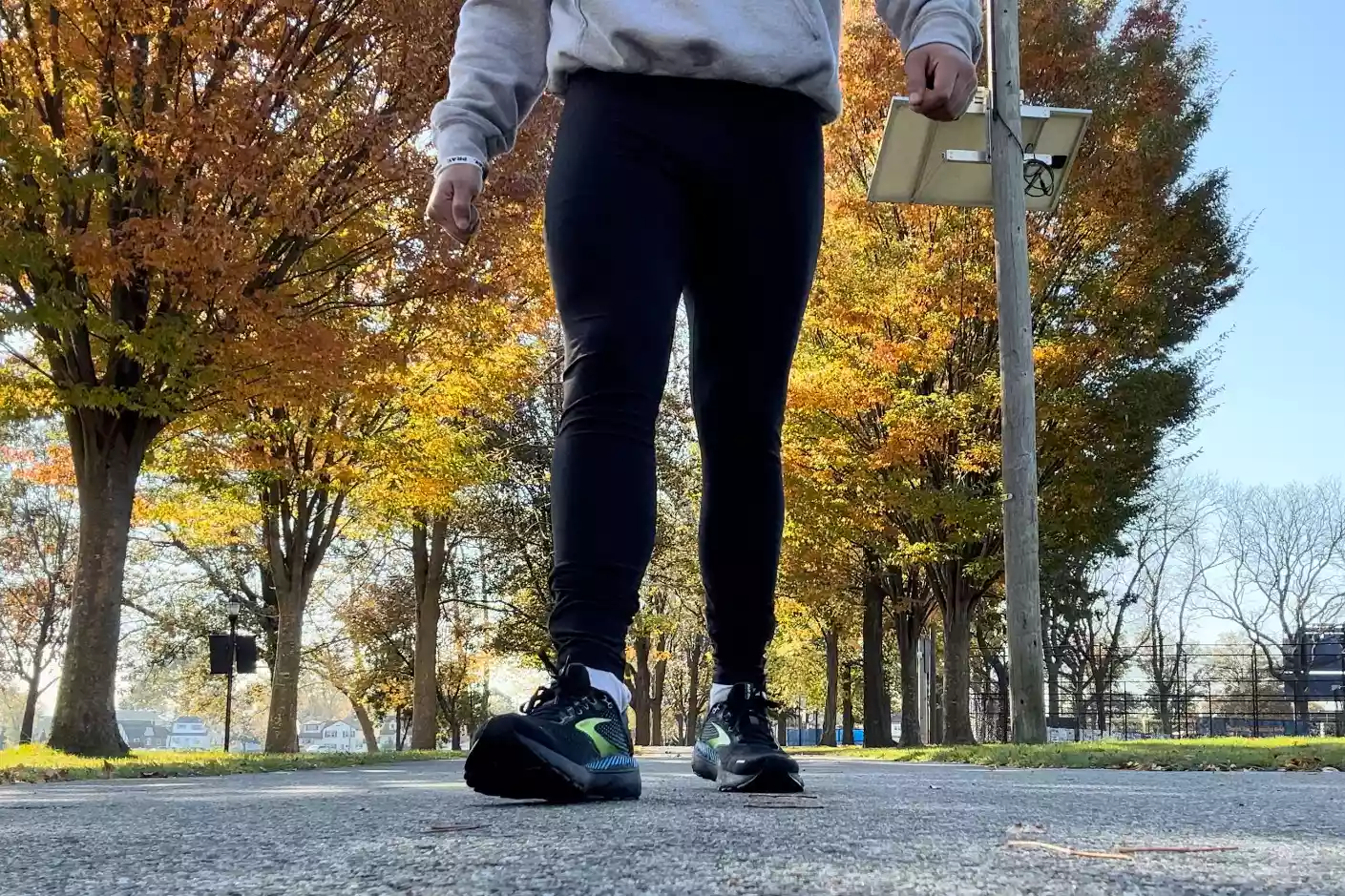
Top-Rated Men's Running Tights with Pockets and Utility
Modern runners carry more than just a house key. We need space for large smartphones, gels, and perhaps a headlamp. In our testing, we found that men's running tights with pockets often fail because the weight of the items causes the tights to sag. The following models solved this problem with superior storage architecture and a secure internal drawstring.
3. Janji Groundwork Tight
The Janji Groundwork is the king of utility, featuring a 7-pocket system. This includes two deep side pockets that fit the largest modern smartphones and a pass-through back pocket for a light jacket. In our 50-mile trail test, we experienced zero-bounce storage, thanks to the high-stretch fabric that pins items against the leg.
- Pros: Unrivaled pocket count, durable fabric, vibrant designs.
- Cons: High price point.
| Spec Box | |
|---|---|
| Fabric Composition | 68% Nylon, 32% Spandex |
| Fabric Weight | 220g |
4. Nike Dri-FIT Challenger
These are reliable men's running tights with phone pockets that won't break the bank. The center-back pocket is sweat-proof, protecting your electronics from moisture. The mesh ventilation panels behind the knees make these a great choice for high-intensity interval training where airflow is a priority.
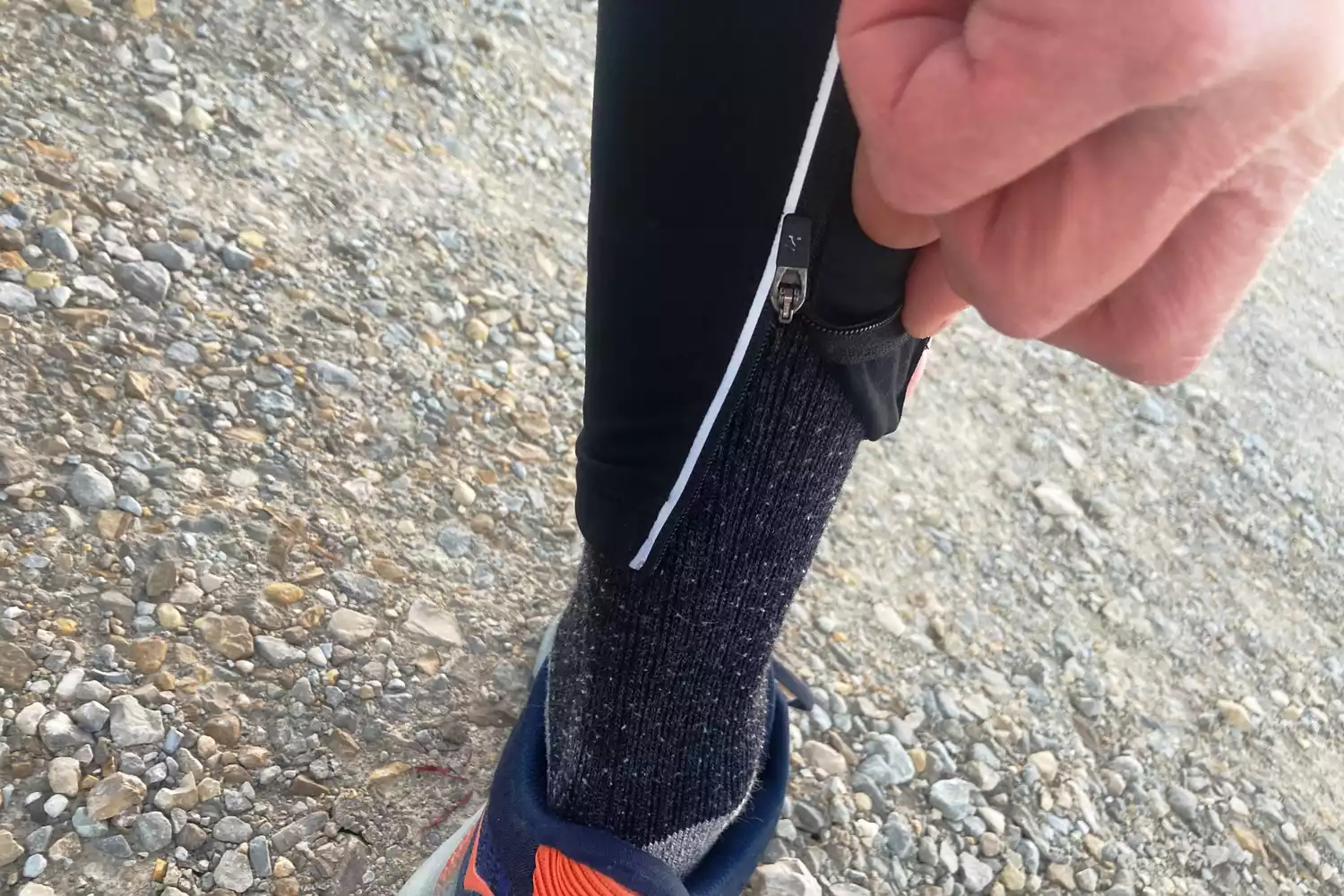
- Pros: Sweat-guard pocket, excellent ventilation, ankle zippers for easy removal.
- Cons: Fewer pockets than trail-specific models.
| Spec Box | |
|---|---|
| Fabric Composition | 83% Polyester, 17% Spandex |
| Fabric Weight | 195g |
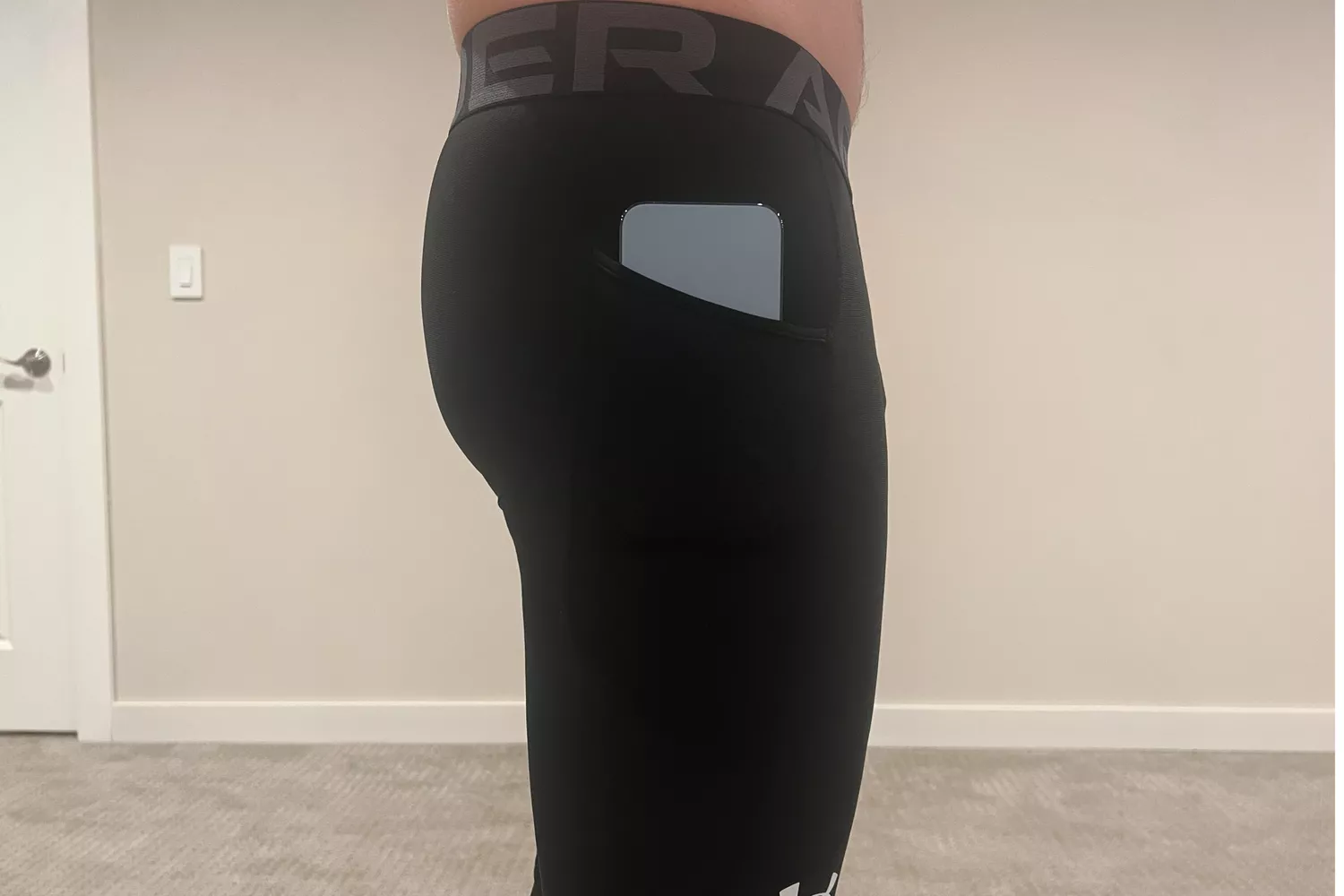
Best Men's Compression Tights for Running & Muscle Recovery
Compression gear has moved beyond the professional athlete's locker room. Research indicates that wearing compression gear can lead to strength recovery scores approximately 60% higher compared to those who do not use such garments. When selecting men's compression tights for running, we focused on graduated compression—tighter at the ankle and slightly looser toward the thigh—to facilitate blood flow.
5. 2XU Light Speed Compression Tights
The 2XU Light Speed is built with a Muscle Containment Stamping (MCS) technology. This internal mapping follows the key muscle groups to reduce muscle oscillation during impact. During our testing, these were the preferred choice for long-distance road runs over 15 miles, as they seemed to delay the onset of leg fatigue.
- Pros: Medical-grade compression, high-visibility reflective running tights for men details, incredibly lightweight.
- Cons: Very tight fit can be difficult to get on and off.
| Spec Box | |
|---|---|
| Fabric Composition | 72% Nylon, 28% Lycra |
| Fabric Weight | 180g |
6. CEP Training Tights
CEP has long been a leader in the medical compression world, and their training tights bring that expertise to the track. These men's compression running tights for muscle recovery offer a balanced feel that is supportive without being suffocating. The four-way stretch allows for deep squats and lunges during cross-training days.
- Pros: Superior durability, anti-odor technology, excellent moisture wicking.
- Cons: Limited pocket space.
| Spec Box | |
|---|---|
| Fabric Composition | 80% Polyamide, 20% Elastane |
| Fabric Weight | 200g |
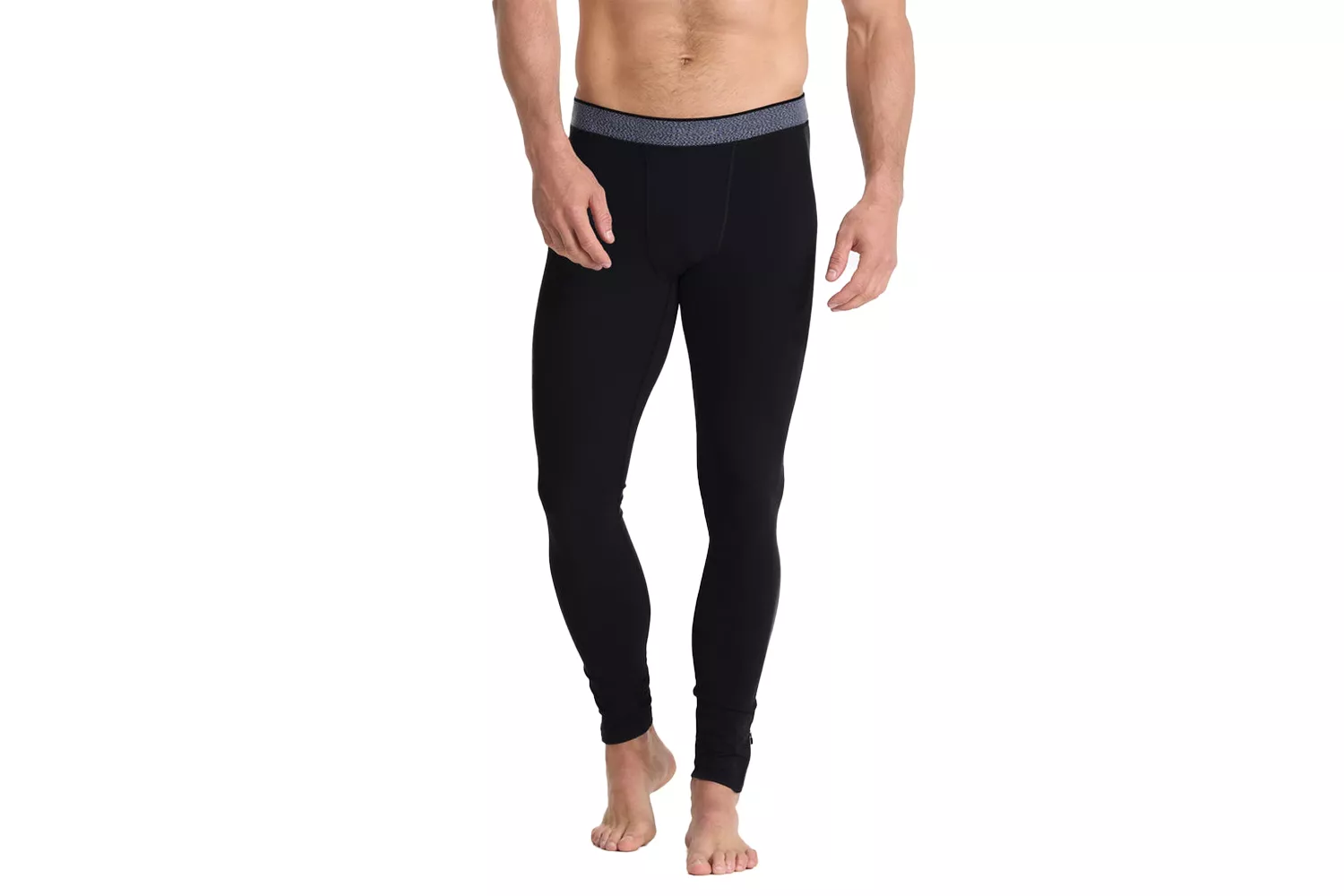
Best for Beginners: Affordable Men's Running Leggings
You don't need to spend $150 to start running in the cold. For those new to the sport or those living in milder climates, affordable men's running leggings for beginners provide the necessary protection at a fraction of the cost. The key is to avoid 100% cotton, which absorbs sweat and becomes heavy and cold.
7. Baleaf Men's Thermal Running Tights
Baleaf has become a cult favorite on Amazon for a reason. Their thermal leggings offer a brushed interior and a simple, functional design for under $30. While they lack the complex body-mapping of premium brands, they provide reliable warmth for casual morning jogs.
- Pros: Incredible value, variety of colors, decent thermal insulation.
- Cons: Seams are not as low-profile as premium models; may chafe on long runs.
| Spec Box | |
|---|---|
| Fabric Composition | 90% Polyester, 10% Spandex |
| Fabric Weight | 230g |
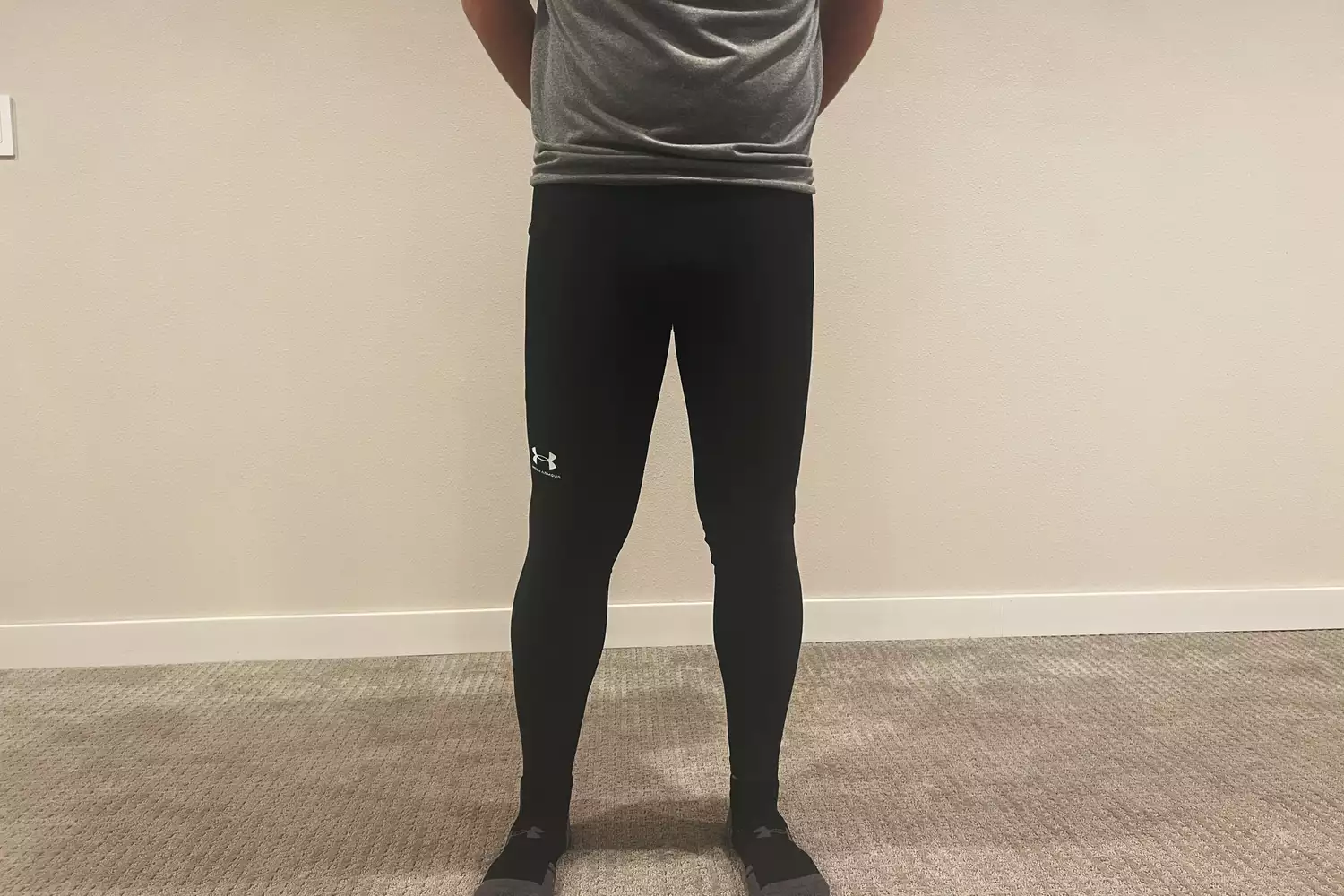
8. Under Armour HeatGear Leggings
While technically a base layer, many runners use these as standalone tights in cool weather. They are famous for their four-way stretch and the gusseted crotch design, which provides maximum mobility. They are the perfect entry point for someone transitioning from shorts to full-length leg coverage.
- Pros: Proven brand reliability, excellent moisture wicking, widely available.
- Cons: No pockets on the basic model.
| Spec Box | |
|---|---|
| Fabric Composition | 79% Polyester, 21% Elastane |
| Fabric Weight | 170g |
Performance Elite: The Racing Choice
9. Tracksmith Reggie Half-Tights
For the competitive runner or the "serious" amateur, Tracksmith offers a blend of heritage style and elite performance. While we've focused on full-length tights, the Reggie is a staple for those who prefer the freedom of a half-tight but want the support of a compression-like fit.
- Pros: Premium feel, tailored fit, beautiful aesthetic.
- Cons: Minimalist storage.
| Spec Box | |
|---|---|
| Fabric Composition | 74% Nylon, 26% Elastane |
| Fabric Weight | 190g |
Buyer's Guide: Tights vs. Pants & Fabric Science
Choosing between running tights and running pants often comes down to the temperature and the intensity of your workout. Running tights should have a snug, second-skin fit that provides support without restricting movement. A proper fit ensures the fabric can effectively wick sweat and maintain body temperature. In contrast, running pants offer a looser fit which may be more comfortable for casual warm-ups but can cause drag and wind-resistance during fast sessions.
When to Go Thermal
Thermal running tights are specifically recommended for use in climates where temperatures regularly drop below 50 degrees Fahrenheit to provide necessary heat management and muscle protection. Cold muscles are more prone to strains and tears; keeping them warm via a brushed fleece lining or a merino wool blend is a preventative safety measure.
Material Matters
The global leggings market is evolving rapidly, with the men's segment representing approximately 22.5% of total revenue in 2025, showing that more men are embracing the technical benefits of tight-fitting gear. Most high-performance tights use a blend of 70-80% polyester or nylon for durability and 20-30% elastane (Spandex/Lycra) for stretch.
Look for flatlock seams which lay flat against the skin to reduce friction. In trail running environment settings, you might also look for a hydrophobic coating on the shins to repel mud and water. Low-light safety is another crucial factor; if you run after work, prioritize pairs with 360-degree reflectivity.
FAQ
Should men wear underwear under running tights?
Most modern running tights are designed with a built-in liner or a gusseted crotch that provides enough support and coverage to be worn without underwear. Wearing an extra layer of cotton underwear can lead to moisture retention and severe chafing. If you prefer the extra coverage, look for specialized moisture-wicking athletic briefs.
What are the benefits of running in tights?
The primary benefits include temperature regulation, reduced wind resistance, and muscle support. Tights also prevent thigh chafing, which is a common issue with loose shorts. For those in colder climates, they provide essential thermal insulation that keeps muscles warm and functioning efficiently.
How tight should men's running tights be?
They should feel like a second skin—snug but not restrictive. You should have a full range of motion at the hip and knee. If the fabric is bunching behind the knees, they may be too long or too loose. If the waistband is sliding down or the fabric is becoming transparent, they are likely too small.
What do guys wear over their running tights?
This is a matter of personal preference and modesty. Many runners wear a lightweight pair of running shorts over their tights for extra pockets and a more traditional look. Others wear the tights as a standalone piece to maximize the aerodynamic benefits and reduce weight.
Are running tights warmer than sweatpants?
In many cases, yes. Because tights sit directly against the skin, they trap a thin layer of warm air and wick away sweat before it can cool you down. Sweatpants, especially cotton ones, allow cold air to circulate between the fabric and your skin and can become heavy and cold if they get wet.