Quick Facts
- Incidence: Duchenne muscular dystrophy affects 1 in every 3,500 to 5,000 live male births worldwide.
- Symptom Onset: Physical red flags typically appear between ages 2 and 3 as toddlers struggle with gross motor skills.
- Key Diagnostic Marker: The Gowers' sign, where a child uses their hands to climb up their body to stand, is a hallmark of the condition.
- Common Misconception: Enlarged calf muscles often indicate weakness (pseudohypertrophy) due to fatty tissue buildup, not extra strength.
- Average Diagnosis Age: The typical diagnosis occurs between 4 and 5 years, often reflecting a delay of up to two years from initial symptoms.
- Genetic Root: Approximately one-third are caused by a completely spontaneous genetic mutation, while two-thirds are inherited from a female carrier.
Common early DMD symptoms in boys include delayed walking, frequent falls, and difficulty climbing stairs. Parents may notice pseudohypertrophy, a condition where calf muscles appear enlarged due to fatty tissue buildup despite underlying weakness. These physical red flags typically become apparent in toddlers and preschoolers as proximal muscle strength begins to decline.
Watching your son reach his milestones is one of the most rewarding parts of parenthood. We celebrate the first roll, the first crawl, and those shaky first steps. However, for some parents, these moments are accompanied by a quiet, nagging intuition that something isn't quite right. Duchenne Muscular Dystrophy (DMD) affects many families worldwide, and recognizing red flags for duchenne muscular dystrophy early can make a profound difference in a child's quality of life. As a wellness editor specializing in life-stage-specific health, I want to guide you through the clinical indicators with empathy and clarity. Recognizing early DMD symptoms in boys is the first step toward accessing the care and support your family deserves.
Recognizing Red Flags in Infancy and Toddlers
In the earliest months of life, infants with Duchenne may appear perfectly healthy. Because DMD is a progressive condition caused by a dystrophin protein deficiency, the muscle damage often accumulates quietly before becoming visible to the naked eye. However, looking back, many parents recall subtle genetic symptoms of duchenne md in infants, such as a slight delay in achieving head control or a tendency to be more "floppy" when held.
As the child enters the toddler years, the focus shifts to gross motor skills. While every child develops at their own pace, muscular dystrophy developmental delays often manifest as a failure to walk by 16 to 18 months. When walking does begin, it may not look quite like the typical toddler "waddle." Instead, you might notice a waddling gait and frequent falls in preschoolers that seem to persist long after the initial learning phase.
One of the most characteristic early signs of Duchenne in boys is known as pseudohypertrophy. To a parent, it might look like their son has exceptionally strong, athletic legs. However, these enlarged calf muscles in boys dmd signs are actually the result of healthy muscle being replaced by fat and connective tissue. This happens because the muscles lack dystrophin, the protein that acts like a shock absorber for muscle cells. Without it, daily movement causes microscopic tears that the body cannot repair correctly.
Other identifying early dmd symptoms in toddlers include:
- Toe walking, which occurs as a result of tight heel cords and a need to balance against shifting core strength.
- Difficulty jumping or hopping, as these actions require explosive proximal muscle strength.
- Prone crawling, where the child keeps their belly closer to the floor rather than rising up on all fours confidently.
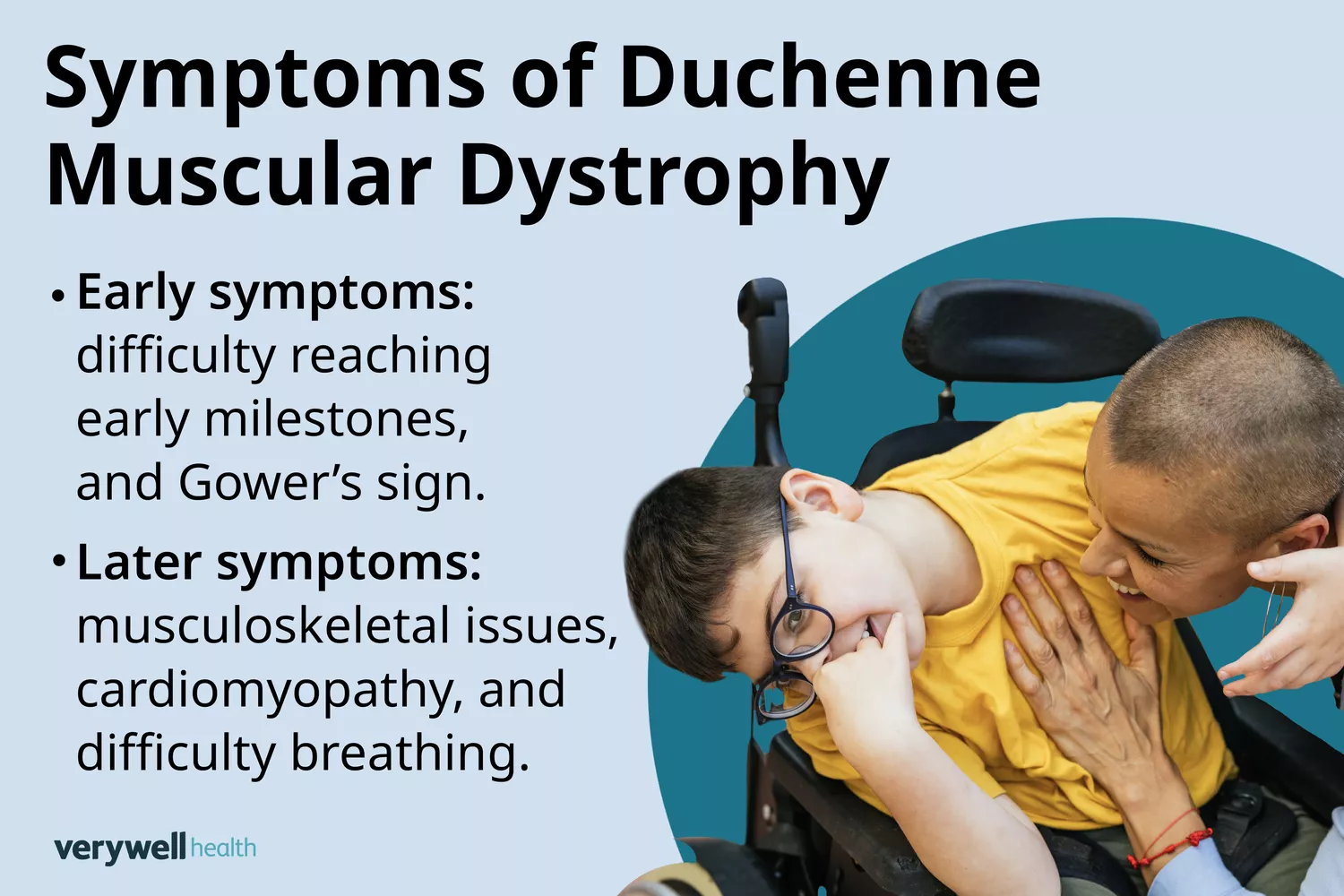
The Gowers' Sign: A Definitive Diagnostic Marker
As proximal muscle weakness—weakness in the muscles closest to the torso, like the hips and thighs—progresses, boys develop a very specific way of moving from the floor to a standing position. This is known as the Gowers' sign. If you are trying to learn how to spot gowers sign in young boys, look for a "climbing" motion.
When a child with Duchenne is sitting on the floor and wants to stand, they cannot simply "pop up" using their leg muscles. Instead, they typically roll onto all fours, extend their legs so their bottom is in the air (similar to a downward dog yoga pose), and then use their hands to "walk" or climb up their own legs to reach an upright position. This maneuver is a compensation for the lack of strength in the hip and knee extensors.
While an occasional use of hands to stand is normal for a very young toddler, a persistent and exclusive reliance on this method is one of the most significant DMD symptoms to discuss with a doctor. Along with the Gowers' sign, you may notice an exaggerated lumbar lordosis, or a swayback posture. As the abdominal and hip muscles weaken, the child may push their belly forward and shoulders back to maintain their center of gravity while walking or standing. This physical shift, combined with difficulty climbing stairs in boys muscular dystrophy, creates a clear picture of the underlying muscle challenges.
Non-Motor Symptoms and Systemic Indicators
While DMD is primarily known as a muscle-wasting disease, it is a systemic condition. Dystrophin is not only found in skeletal muscle but also in the brain and heart. This is why we often see non-motor symptoms as early indicators. Approximately one-third of boys with Duchenne experience some form of learning disability, ADHD, or autism spectrum traits.
Speech delays are another frequent red flag. Many parents report that their sons were late talkers, which can sometimes lead to a focus on speech therapy while the underlying neuromuscular issue remains undiagnosed. It is important to remember that these cognitive and behavioral aspects are part of the genetic symptoms of duchenne md in infants and toddlers.
The genetics of the condition are also a vital piece of the puzzle. DMD follows an X-linked recessive inheritance pattern, meaning it primarily affects boys and is often carried by mothers. However, the absence of a family history does not rule out the condition. Statistics show that about one-third of cases arise from spontaneous mutations, where the gene changes for the first time in that specific child.
Diagnosis and Next Steps for Parents
If you recognize these red flags, the most important step is to advocate for a clinical evaluation. The journey often begins with a visit to a pediatrician, who should then refer you to a neuromuscular specialist or a provider specializing in pediatric neurology.
The diagnostic process usually involves two main steps. First is the Creatine kinase (CK) test. Creatine kinase is an enzyme that leaks out of muscle fibers when they are damaged. In a healthy child, CK levels are relatively low. In a boy with DMD, these levels are often 10 to 100 times the normal range, even before physical symptoms become severe. A high CK level is a strong indicator of muscle fiber degeneration and warrants immediate follow-up.
The second step is genetic mutation analysis. This blood test looks specifically at the dystrophin gene to identify the exact mutation responsible for the protein deficiency. Confirming the specific mutation is essential, as some modern therapies are tailored to specific genetic profiles. While a muscle biopsy was once the standard for diagnosis, genetic testing is now the preferred, less invasive method to confirm DMD symptoms and their cause.
Early diagnosis is not just about a label; it is about early intervention. Accessing specialized physical therapy can help manage heel cord tightness, while early medical treatments can help slow disease progression. We understand that this process is overwhelming, but identifying these signs early provides the best opportunity to support your child’s mobility and long-term health.

FAQ
What are the earliest signs of Duchenne muscular dystrophy?
The earliest signs often include motor delays, such as being late to sit up, crawl, or walk. Parents may also notice that their child is more prone to falling than their peers or has difficulty rising from the floor. Speech delays and behavioral challenges like ADHD can also be early indicators.
At what age do symptoms of DMD usually start?
While the genetic mutation is present from birth, noticeable physical symptoms typically emerge between the ages of 2 and 3. In some cases, subtle signs like enlarged calves or a waddling gait may be seen shortly after the child begins to walk, but the symptoms become much more apparent as the child reaches preschool age.
What is Gowers' sign and how is it related to DMD?
Gowers' sign is a medical observation where a child must use their hands and arms to "climb up" their own body to stand from a sitting or squatting position. This occurs because the muscles in the hips and thighs are too weak to lift the torso independently. It is a classic clinical indicator used to identify proximal muscle weakness in boys with DMD.
Can DMD symptoms appear in infancy?
Yes, though they are often subtle. Some infants may show poor muscle tone, known as hypotonia, or delays in achieving early milestones like holding their head up or rolling over. However, because the disease is progressive, the most recognizable symptoms usually wait until the child is more mobile.
How does DMD affect a child's mobility over time?
DMD causes progressive muscle weakness. In the early years, this manifests as difficulty with running and climbing. Over time, the weakness spreads from the proximal muscles to the distal muscles (further from the torso). Most boys will require a wheelchair for mobility by their early teens, and the condition eventually affects the muscles used for breathing and heart function.