Quick Facts
- Success Rate: Clinical data shows that 84.3% of men report hair regrowth of varying degrees when using the 5% solution.
- Gold Standard: The 5% topical formulation is the clinical benchmark for treating hereditary thinning.
- Timeline: Most users observe early results, including increased density, within a 3-to-6-month window.
- Mechanism: Acts as a vasodilator to improve scalp microcirculation and revitalize miniaturized follicles.
- Application: Requires a twice-daily commitment to maintain the transition from the telogen to the anagen phase.
- Formula Choice: Choosing between foam and liquid usually depends on scalp sensitivity to propylene glycol.
Minoxidil for men works as a vasodilator that improves scalp microcirculation and extends the hair's anagen growth phase. Most users observe early results, like reduced shedding or increased density, between three to six months of consistent use. For optimal efficacy, the treatment must be applied twice daily to maintain the revitalized state of the hair follicles.
How Minoxidil Reverses Thinning: The Science
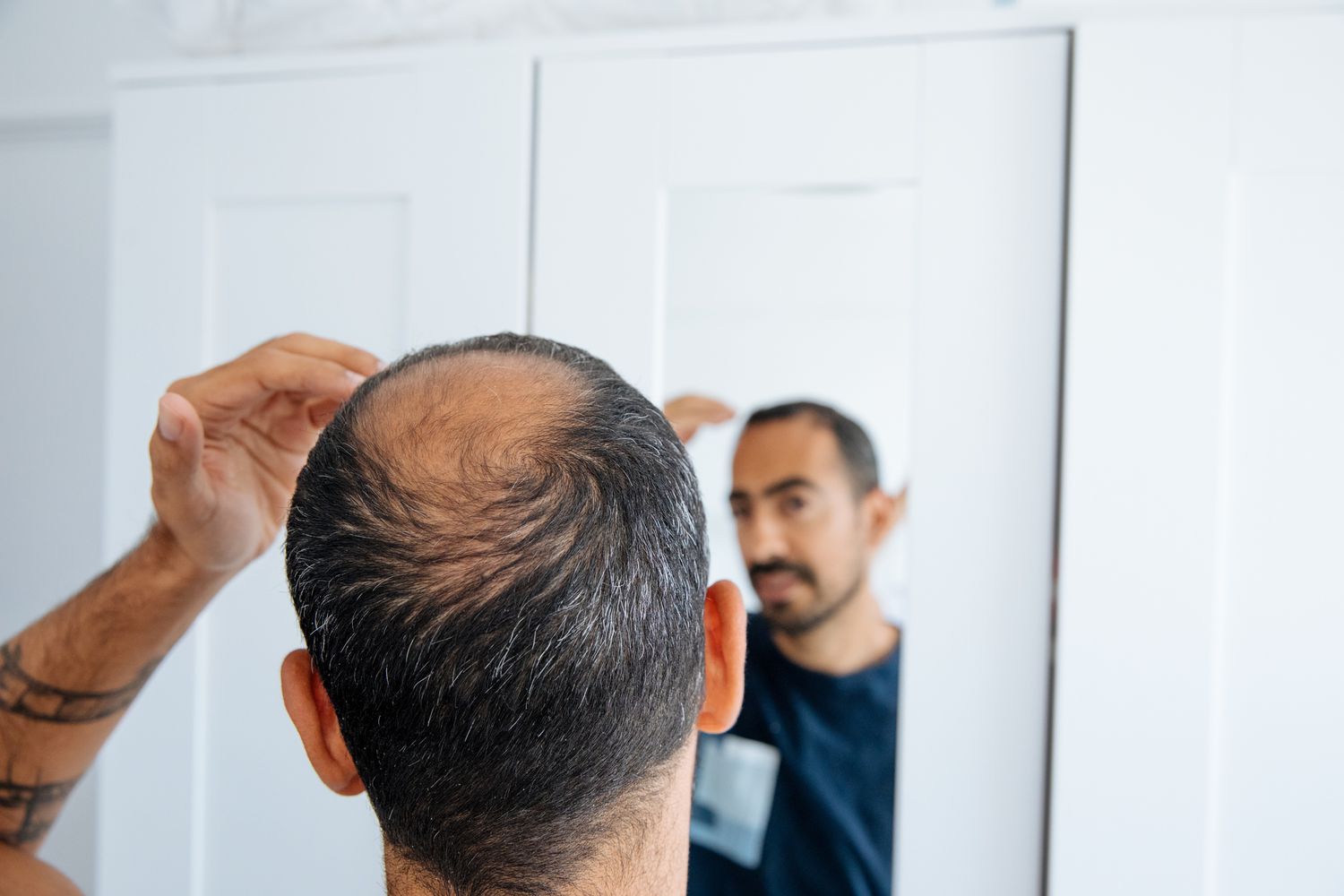
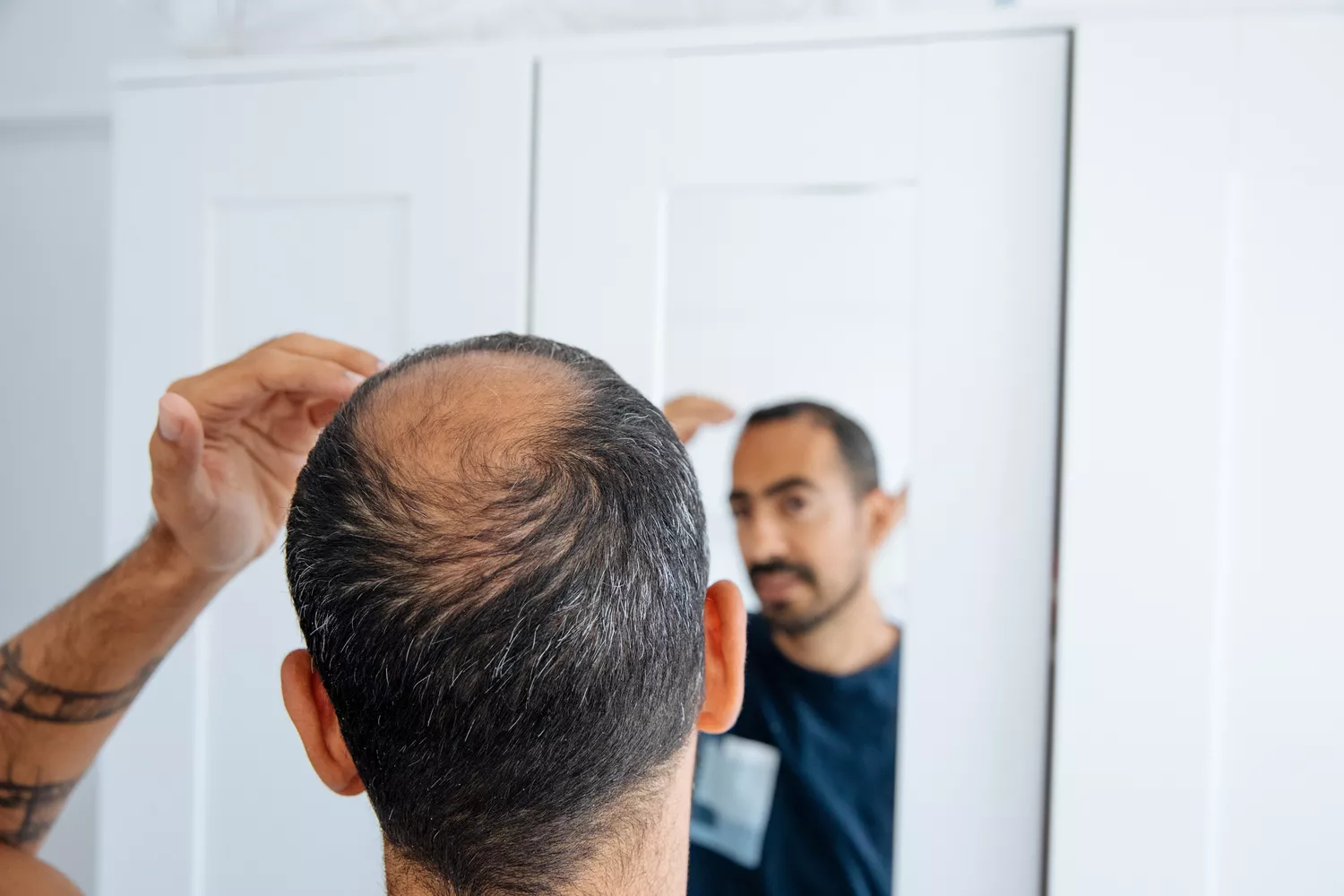
Understanding hair loss requires looking beneath the surface at the lifecycle of the follicle. For those experiencing androgenetic alopecia, follicles undergo a process known as hair follicle miniaturization. Over time, the growth phase—the anagen phase—shortens, while the resting phase—the telogen phase—becomes more dominant. The result is hair that grows back thinner, shorter, and eventually, not at all.
Minoxidil for men intervenes in this cycle by acting as a potassium-channel opener and a vasodilator. By relaxing the smooth muscles in the walls of the blood vessels, it enhances scalp microcirculation. This increased blood flow delivers vital nutrients and oxygen directly to the follicle, essentially "waking up" those that have begun to shrink.
One of the early signs of minoxidil working for male pattern baldness is a shifts in the hair’s biological clock. The treatment forces follicles out of the resting phase and back into an active growth state. In a one-year clinical study of 904 men with androgenetic alopecia, 84.3% of participants reported hair regrowth of varying degrees when using a 5% topical minoxidil solution twice daily. This evidence suggests that while minoxidil does not cure baldness, it effectively manages the symptoms by biologically reversing the thinning process at the vertex.
Foam vs. Liquid: Choosing Your Formula
When men decide to start their regrowth journey, the first hurdle is often choosing between the traditional liquid solution and the newer foam version. While both are clinically proven to treat vertex thinning, the chemical composition of the "vehicle" used to deliver the active ingredient differs.
The liquid solution typically uses propylene glycol as a solvent to help the medication penetrate the skin. However, this ingredient is a known irritant for many. If you have a sensitive scalp, the liquid version may lead to contact dermatitis or persistent dandruff. The foam version was developed specifically to address this, as it is generally free of propylene glycol, dries significantly faster, and is less likely to drip down the face.
Felix’s Note: There is often a debate regarding the difference between brand name Rogaine and generic minoxidil. From a strictly pharmacological perspective, the 5% active ingredient remains the same. Generic versions like Kirkland are highly cost-effective and provide the same clinical benefits, though the brand-name foam is often praised for its superior texture and ease of styling.
| Feature | 5% Minoxidil Liquid | 5% Minoxidil Foam |
|---|---|---|
| Application | Dropper (Precise for scalp) | Half-cap (Easy to spread) |
| Drying Time | 30–60 minutes | 5–10 minutes |
| Irritation Risk | Higher (due to propylene glycol) | Lower |
| Best For | Targeting specific patches | Large areas and sensitive skin |
| Cost | Generally lower | Slightly higher |
A 48-week clinical trial demonstrated that 5% topical minoxidil produced 45% more hair regrowth than the 2% formulation in men experiencing hereditary thinning. This confirms that for most men, the 5% concentration is the mandatory standard for meaningful cosmetic change.
The Step-by-Step Rogaine Application Guide for Men
Consistency is the most critical factor in hair restoration. If the medication is not applied regularly, the follicles will eventually return to their miniaturized state. Following a structured rogaine application guide ensures that you maximize the absorption of the vasodilator.
- Prepare the Scalp: Ensure your hair and scalp are completely dry. Applying the solution to a wet scalp can increase systemic absorption, which might lead to unwanted side effects like a racing heart.
- Measure the Dose: Use exactly 1mL of the liquid solution or half a capful of the foam. Using more than the recommended amount will not speed up growth but will increase the risk of irritation.
- Target the Scalp, Not the Hair: Part your hair in the areas where thinning is most visible—usually the crown or vertex. Apply the product directly to the skin. Hair itself is dead tissue; the goal is to reach the live follicles beneath the surface.
- Massage and Wash: Gently massage the product into the scalp with your fingertips to improve distribution. Immediately wash your hands with soap and water to prevent the medication from accidentally touching your face or eyes.
- The Absorption Window: Allow the product to dry for at least two to four hours before wearing a hat, going to bed, or washing your hair. This ensures the scalp microcirculation has enough time to be influenced by the treatment.
For many, this step by step rogaine application guide for men becomes a seamless part of a morning and evening grooming routine, similar to brushing one's teeth.
Managing Expectations: The Minoxidil Hair Growth Timeline
One of the primary reasons men stop treatment is a lack of immediate results. Biology takes time, and the hair growth cycle is notoriously slow. Having a clear minoxidil hair growth timeline helps manage the psychological hurdles of the process.
- Months 0–2 (The "Minoxidil Shed"): It may sound counterintuitive, but many men experience increased hair loss in the first few weeks. This is actually a positive clinical sign. The medication is pushing out old, thin hairs in the telogen phase to make room for new, thicker hairs in the anagen phase.
- Months 3–6 (Early Regrowth): You may begin to see fine, colorless "peach fuzz" hairs in previously thinning areas. During this period, clinical research has found that 5% topical minoxidil can increase hair density in men by 12% to 18% after 24 weeks of consistent application.
- Months 6–12 (Peak Density): This is where the most significant cosmetic improvements occur. The new hairs become darker and thicker, blending in with the rest of your hair.
- Long-term Maintenance: After one year, the goal shifts to maintaining the revitalized state. If you stop the treatment, the progress will likely reverse within three to four months as the follicles lose the stimulation of the vasodilator.
A realistic minoxidil hair growth results timeline for men emphasizes patience over speed. Those who stick through the shedding phase are the ones who ultimately see the highest success rates.
Advanced Stacks and Side Effects
While Minoxidil for men is highly effective on its own, many biohackers and longevity enthusiasts look for ways to optimize their results. A common strategy involves combining the follicle-stimulating properties of minoxidil with DHT blockers like finasteride. While minoxidil improves blood flow, finasteride addresses the hormonal cause of thinning by reducing the levels of dihydrotestosterone (DHT) that attack the follicles.
However, topical application isn't for everyone. Some men find the daily routine cumbersome or struggle with persistent scalp issues. In these cases, there are significant benefits of switching from topical to oral minoxidil. Oral versions are available by prescription and can be easier for those who experience how to manage minoxidil scalp irritation and dandruff unsuccessfully with topical foam.
Managing minoxidil side effects is usually straightforward. Most issues are localized to the scalp, such as itching or dryness. If you notice these symptoms, switching from a liquid to a foam, or reducing application to once a day temporarily, can help the skin adapt.
Safety Warning: While rare, systemic absorption can occur. If you experience dizziness, chest pain, or rapid weight gain due to water retention, consult a medical professional immediately. Minoxidil is a potent drug that affects blood pressure, and while the topical version is safe for most, individual sensitivity varies.
FAQ
How long does it take for minoxidil to work for men?
Most men will start to see the first signs of hair density improvement between three and six months. However, peak cosmetic results usually require a full 12 months of twice-daily application. It is important to remember that the biological shift from the resting phase to the growth phase is not instantaneous.
What are the side effects of minoxidil for men?
The most common side effects are localized scalp irritation, including itching, redness, and dandruff. These are often caused by the propylene glycol in liquid formulas. Rare but more serious side effects include lightheadedness, heart palpitations, or unwanted facial hair growth if the product is accidentally applied to the face.
Does minoxidil work on a receding hairline?
Clinically, minoxidil is most effective for vertex thinning (the crown of the head). While many men use it on a receding hairline with some success, it is not officially FDA-approved for the frontal scalp. Results at the hairline are often more modest compared to the significant regrowth seen at the crown.
What happens if you stop using minoxidil?
If you discontinue treatment, the hair follicles will slowly return to their previous miniaturization process. Within three to four months, any hair that was grown or maintained by the medication will likely shed, and the natural progression of androgenetic alopecia will resume.
Does minoxidil cause initial hair shedding?
Yes, initial shedding is a very common occurrence during the first two to eight weeks of treatment. This happens because the medication accelerates the transition of hair from the telogen resting phase into the anagen growth phase. This "shed" is actually a sign that the treatment is working and making room for healthier hair.