Quick Facts
- Primary Cause: The infection is caused by the Treponema pallidum bacteria, which enters the body through minor cuts or mucous membranes.
- Transmission Risk: Health experts estimate the transmission risk is approximately 33% per single sexual exposure to an infected partner.
- The 1-Year Rule: The duration of syphilis diagnosis and treatment depends heavily on whether the infection was acquired within the last 12 months.
- Diagnostic Markers: Health providers use blood tests like RPR and VDRL tests to screen for and monitor the activity of the infection.
- Direct Answer: Early signs of syphilis in men typically appear within 10 to 90 days of exposure. The first stage, primary syphilis, usually involves a single or multiple painless ulcers called chancres on the genitals, mouth, or skin. These sores often go unnoticed because they do not cause pain and eventually heal on their own, though the infection remains active and requires medical intervention if the chancre disappears.
Syphilis in men is a bacterial infection that, if left untreated, can lead to permanent damage. However, it is fully curable with early intervention. This guide explores syphilis symptoms in males across all stages and outlines the latest syphilis diagnosis and treatment facts for 2026. Understanding how the infection moves through the body is the first step in taking control of your sexual health.
Understanding the 'Great Imitator': How Syphilis Progresses
In the medical community, syphilis is frequently referred to as the Great Imitator. This nickname exists because its symptoms often look like many other diseases, from common skin rashes to the flu. The infection is caused by the bacterium Treponema pallidum, a corkscrew-shaped organism that can lie dormant in the body for years.
The incubation period is a critical window for any man concerned about exposure. It typically takes about three weeks for the first physical sign to appear, though how long after exposure do syphilis symptoms appear in men can vary from 10 to 90 days. During this time, the bacteria are multiplying and spreading through the bloodstream.
It is also vital to note the link between syphilis and HIV co-infection. Because the sores caused by syphilis provide an easy entry point for other viruses, men with active syphilis are at a significantly higher risk of contracting or transmitting HIV. Recent global data highlights the prevalence of these issues. According to the World Health Organization, the global pooled prevalence of syphilis among men who have sex with men is estimated at 10.4%. This high rate underscores the importance of regular screening in high-risk groups.
Primary & Secondary Syphilis: Identifying the Early Signs
The progression of syphilis in men is divided into distinct stages, each with unique clinical presentations. Recognizing the transition from the primary to the secondary stage is essential for preventing the bacteria from moving into the internal organs.
The Primary Stage: The Chancre
The hallmark of primary syphilis is the chancre. This is a firm, round, and usually painless sore. One of the most confusing aspects for patients is the distinction between painless vs painful sores in male syphilis. Unlike herpes, which typically causes painful, fluid-filled blisters, a syphilis chancre is generally painless and may even be hidden inside the rectum or mouth.
These early signs of syphilis in men on genitals may be mistaken for an ingrown hair or a harmless skin tag. Even if the chancre is not treated, it will eventually heal on its own within three to six weeks. However, the healing of the sore does not mean the infection is gone; it simply means the bacteria are moving deeper into the body.
The Secondary Stage: The Systemic Flare
If the primary stage is ignored, the infection progresses to secondary syphilis. This stage represents a systemic explosion of the bacteria. The most recognizable symptom is a syphilis rash on palms and soles in males. This rash usually appears as rough, red, or ham-colored spots. Because it does not itch, many men overlook it or attribute it to a new laundry detergent or contact dermatitis.
| Symptom Category | Manifestation in Men |
|---|---|
| Skin Rash | Non-itchy, ham-colored spots on the trunk, palms, or soles of the feet. |
| Hair Changes | Patchy alopecia, often described as having a moth-eaten appearance on the scalp or beard. |
| Mucous Membranes | Moist, wart-like growths in the groin or armpits known as condyloma lata. |
| Systemic Signs | Fever, swollen lymph nodes, sore throat, and generalized muscle aches. |
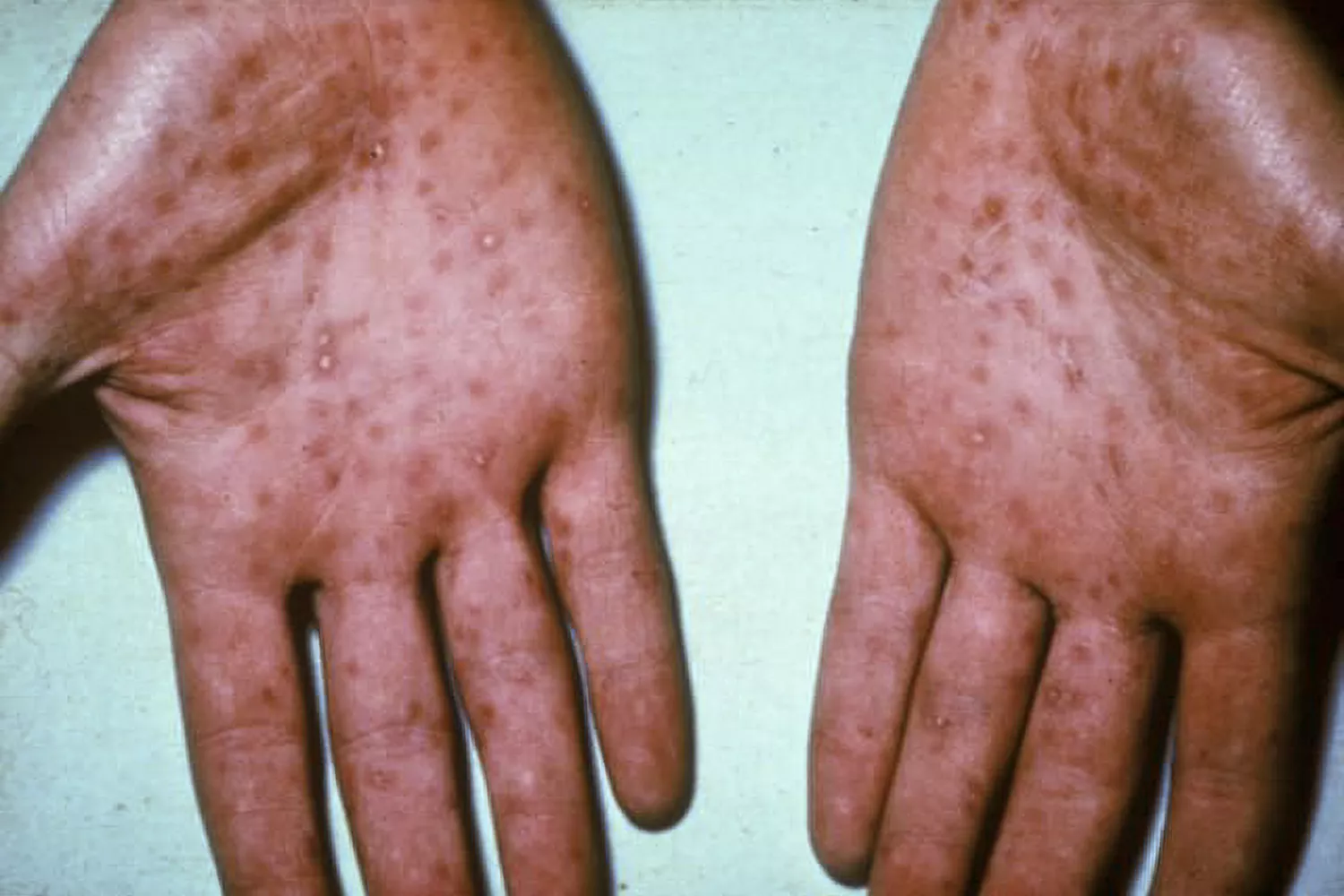
Secondary syphilis often manifests as a non-itchy rash that frequently appears on the palms of the hands and the soles of the feet. Other systemic symptoms in men include fever, swollen lymph nodes, patchy hair loss with a moth-eaten appearance, and moist, wart-like growths known as condyloma lata. If left untreated, the bacteria can spread to the nervous system, eyes, or ears, causing neurological or sensory dysfunction such as tinnitus or blurry vision.
Red Flags: When Syphilis Attacks the Brain, Eyes, and Ears
If the infection remains untreated for years, it can enter the latent and tertiary stages. During these phases, the Treponema pallidum bacteria can cause massive internal damage. This is where the neurological symptoms of syphilis in men late stage become a serious concern.
The condition known as neurosyphilis occurs when the bacteria invade the central nervous system. This can happen at any stage, but it is most common in the late stages of syphilis in men.
⚠️ RED FLAG WARNING: Urgent Symptoms
If you experience any of the following, seek immediate medical care at an emergency room:
- Sudden changes in vision or permanent blurry vision (Ocular Syphilis)
- Persistent ringing in the ears (tinnitus) or sudden hearing loss (Otic Syphilis)
- Severe headaches, neck stiffness, or sudden confusion
- Difficulty coordinating muscle movements or a change in your gait (walking pattern)
At this point, the damage to the heart, brain, and nerves may be irreversible, even if the bacteria are eventually killed with antibiotics. This makes early syphilis diagnosis and treatment a literal life-saver.
Syphilis Diagnosis and Treatment Protocols
Modern medicine has made syphilis one of the most treatable STIs, provided it is caught in time. In the United States, primary and secondary syphilis cases decreased by 10% in 2023, representing the first substantial decline in more than two decades. This decline is largely attributed to increased testing and more accessible treatment options.
How Testing Works
Screening usually involves a two-step blood test process. First, a non-treponemal test like the RPR and VDRL tests is used to detect antibodies. If these are positive, a second, more specific treponemal test is performed to confirm the diagnosis.
The Gold Standard: Penicillin
The standard treatment for syphilis is Benzathine penicillin G administered via intramuscular injection. This is not a pill you take at home; it must be administered by a healthcare professional.
- Early Infection: For infections lasting less than a year, a single dose is typically effective.
- Late or Unknown Duration: If the infection has lasted longer than a year, a three-week course of weekly injections is required.
Alternatives and Reactions
For patients with a documented allergy, a Doxycycline alternative is the primary syphilis treatment options for men with penicillin allergy. This usually involves taking the antibiotic twice daily for 14 to 28 days.
During the first 24 hours after receiving treatment, some men experience the Jarisch–Herxheimer reaction. This includes fever, chills, and headache as the body reacts to the toxins released by the dying bacteria. While uncomfortable, it is not an allergic reaction and usually resolves quickly.

Follow-up blood tests like RPR or VDRL are necessary to monitor the response to therapy and ensure the infection is fully cleared. You should avoid sexual contact until the sores are completely healed and your doctor confirms the infection is gone.
Modern Prevention: DoxyPEP and Partner Safety
Prevention has evolved significantly in recent years. While condoms remain a primary defense, they do not offer 100% protection because syphilis can be transmitted through contact with skin-to-skin areas not covered by a condom.
A newer preventative measure is DoxyPEP (Doxycycline Post-Exposure Prophylaxis). This involves taking 200mg of doxycycline within 72 hours of unprotected sex. Studies have shown that DoxyPEP can significantly reduce the risk of contracting syphilis and chlamydia.
When a man is diagnosed, partner notification is essential. Any sexual partner from the last three to twelve months should visit a sexual health clinic for testing. It is a common myth that syphilis can be caught from toilet seats or sharing towels; the bacteria are fragile and die quickly outside the human body, so transmission almost always requires direct contact with an active sore.
FAQ
What are the first signs of syphilis in men?
The very first sign is usually a single, painless sore called a chancre. It often appears on the penis, scrotum, or around the anus about three weeks after exposure. Because it doesn't hurt, many men don't notice it or think it is a minor skin irritation.
How do men get tested for syphilis?
Testing typically involves a simple blood draw. Doctors use a combination of tests, starting with an RPR or VDRL screening, followed by a confirmatory treponemal test. In some cases, a doctor may take a fluid sample directly from a visible sore.
What does a syphilis sore look like?
A syphilis sore, or chancre, is usually firm, round, and about the size of a pencil eraser. It is generally painless and doesn't produce an itch. It may look like a small crater with a clean base and raised edges.
Can syphilis be cured with antibiotics?
Yes, syphilis is fully curable with the right antibiotics. Benzathine penicillin G is the most effective treatment. While the medicine kills the bacteria and prevents further damage, it cannot reverse any permanent scarring or organ damage that occurred before treatment.
How long after exposure do syphilis symptoms start?
Symptoms usually begin within 10 to 90 days, with the average being about 21 days. If you believe you have been exposed, you should not wait for symptoms to appear before getting tested, as the infection can be detected via blood work even before the chancre develops.
If you suspect you have been exposed or notice an unusual sore or rash, the best course of action is to visit a sexual health clinic immediately. Early detection makes the difference between a single shot of penicillin and years of potential health complications.