
Quick Facts
- Patient Demand: Approximately 3% to 6% of men who have a vasectomy eventually decide to have it reversed.
- Patency Success: Microsurgical procedures achieve a mean patency rate—the return of sperm to the ejaculate—of about 87%.
- Pregnancy Rate: Successful pregnancy rates after the procedure typically range from 40% to 80%, depending largely on partner age.
- Primary Predictor: The obstructive interval, or the number of years since the original vasectomy, is the most critical factor for success.
- Procedure Length: The surgery generally takes 2 to 4 hours and is performed under a high-powered surgical microscope.
- Recovery: Most men return to light activities within a few days, but must avoid heavy lifting for several weeks.
Vasectomy reversal involves microsurgical procedures to reconnect the vas deferens and restore sperm flow. Surgeons perform either a vasovasostomy, which joins the severed ends of the vas deferens, or a vasoepididymostomy, which connects the vas deferens directly to the epididymis if an obstruction is found. The specific technique used depends on the quality of the fluid and the presence of sperm identified during the operation.
Understanding Success Rates: The 15-Year Rule
When considering a vasectomy reversal, the first question most men ask is whether it will actually work. The answer is generally positive, but success is not a single number. It is divided into two categories: patency rates (sperm returning to the semen) and pregnancy rates (achieving a live birth). While microsurgical techniques can restore sperm flow in up to 99% of cases under ideal conditions, the ability to conceive naturally is influenced by a broader range of variables.
The most significant factor influencing these outcomes is the obstructive interval, which refers to the amount of time that has passed since the original vasectomy. Data indicates that sperm returns to the ejaculate in about 97% of men who have their reversal within three years of their initial surgery. However, this rate drops to roughly 71% for those seeking a reversal after 15 years or more. This decline occurs because, over time, the back-pressure caused by the original vasectomy can lead to small "blowouts" or secondary obstructions in the delicate tubules of the epididymis.
Beyond the technical success of the surgery, the fertility health of the female partner plays a vital role in pregnancy rates. Even when a surgeon achieves perfect patency, the age of the female partner significantly impacts the likelihood of conception. For couples where the female partner is under 35, pregnancy rates are notably higher than in cases where the partner is older. This is why a comprehensive fertility evaluation for both partners is often recommended before proceeding with surgery.
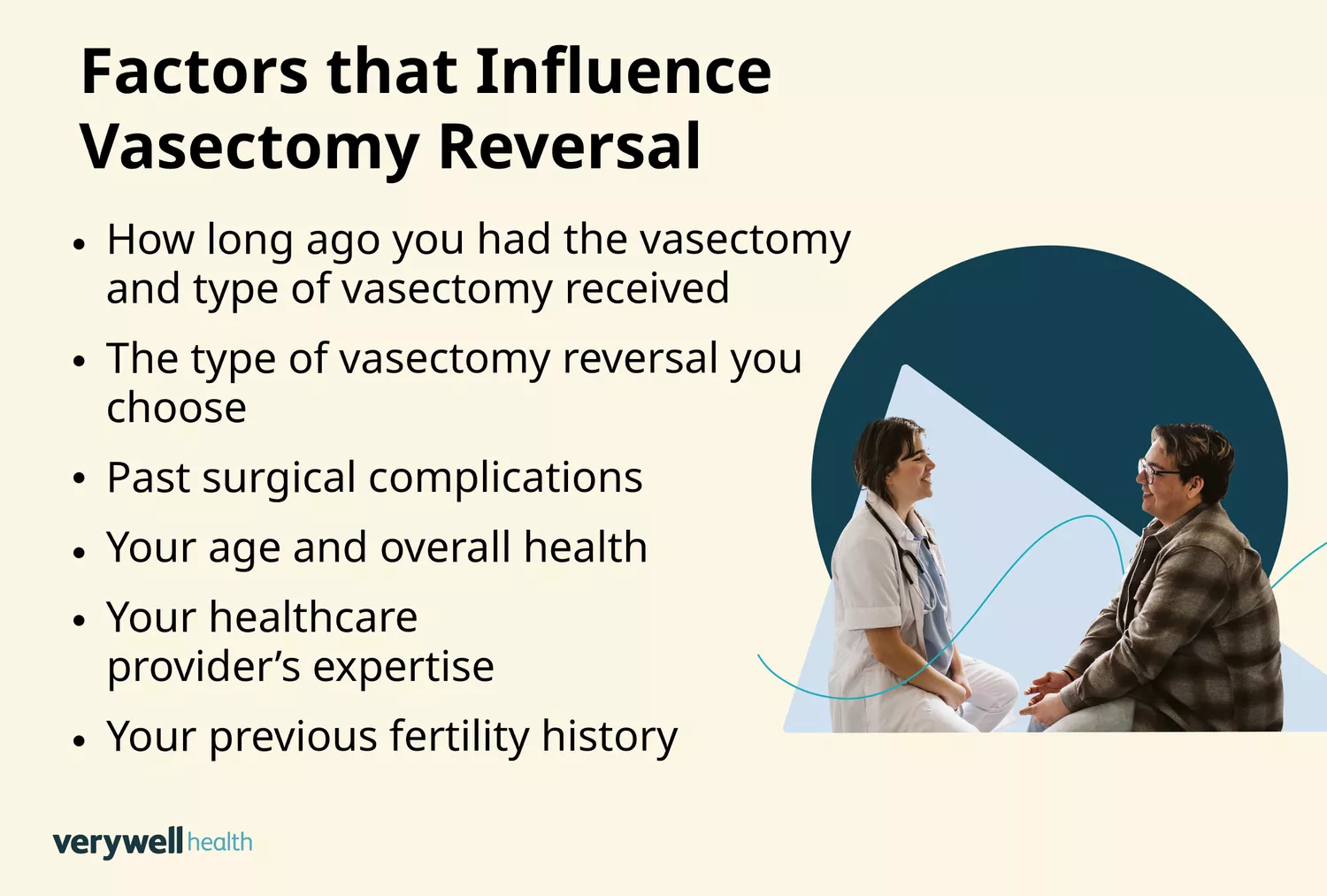
During the procedure, the urologic surgeon will analyze the fluid found within the vas deferens. If the fluid is clear and contains whole sperm, the vasectomy reversal success rates are typically very high. If the fluid is thick or pasty and contains no sperm, it may indicate a blockage further upstream, requiring a more complex surgical approach. Regular semen analysis in the months following the operation is necessary to track sperm motility and count as the body heals.
Surgical Techniques: Vasovasostomy vs. Vasoepididymostomy
A vasectomy reversal is not a "one size fits all" operation. Because the surgeon cannot know the exact state of the internal reproductive tract until the procedure is underway, they must be prepared to perform one of two distinct microsurgical techniques. The decision is made intraoperatively based on the quality of the fluid expressed from the testicular side of the vas deferens.
The standard procedure is a vasovasostomy. In this method, the surgeon re-establishes the connection between the two severed ends of the vas deferens. Using a high-powered surgical microscope, the surgeon uses sutures thinner than a human hair to join the inner and outer layers of the tube. This multi-layer microsurgical technique ensures a watertight seal and minimizes the risk of scarring, which could lead to a new blockage.
However, if the surgeon identifies an epididymal obstruction—a blockage in the tightly coiled tube behind the testicle—a vasovasostomy will not work. In this scenario, the surgeon must perform a vasoepididymostomy. This is a much more technically demanding procedure where the vas deferens is connected directly to the epididymis, bypassing the blockage entirely. Because this requires working with even smaller structures, the expertise of a fellowship-trained urologic surgeon is paramount.
The use of microsurgical techniques has revolutionized the field of male infertility. By utilizing a surgical microscope that provides 15x to 30x magnification, surgeons can precisely align the microscopic channels. This level of detail is what allows for the high patency rates seen in modern urology. While some surgeons may offer "mini-reversals" or non-microscopic approaches, the gold standard remains the formal microsurgical reconnection due to its superior long-term outcomes.
Recovery Timeline and Post-Operative Care
Understanding the vasectomy reversal recovery time is essential for planning purposes, especially for men with physically demanding jobs. While the procedure is usually performed as an outpatient surgery under general anesthesia or heavy sedation, the internal healing process is delicate and requires patience.
In the first 48 to 72 hours after surgery, the primary goal is to minimize swelling and protect the microsurgical repairs. Patients are typically advised to use ice packs intermittently and wear a supportive garment, such as a jockstrap, to reduce movement of the scrotum. Most men experience mild to moderate discomfort, which can usually be managed with over-the-counter pain medication or short-term prescription options.
The vasectomy reversal recovery timeline and activity restrictions generally follow this pattern:
- Days 1-3: Strict rest. Avoid walking long distances or standing for extended periods.
- Days 4-7: Return to light office work. Avoid any lifting over 10 pounds.
- Weeks 2-3: Gradual increase in walking. Most men can resume non-strenuous daily activities.
- Weeks 4+: Clearance for strenuous exercise, heavy lifting, and sexual activity.
It is important to remember that while the skin incisions heal quickly, the internal connections—the vasovasostomy or vasoepididymostomy—are very fragile during the first month. Any sudden strain or trauma to the area could cause the reconnection to pull apart.
Postoperative care also involves long-term monitoring. The first semen analysis is typically scheduled two to four months after the surgery. This allows enough time for any stored sperm to clear and for the new connections to begin functioning. It may take up to six months for sperm counts to stabilize, and in the case of a vasoepididymostomy, it can sometimes take up to a year for sperm to return to the ejaculate.
Vasectomy Reversal vs. IVF: Which is Right for You?
For many couples, the choice isn't just about whether a vasectomy reversal is possible, but whether it is the best path forward compared to In Vitro Fertilization (IVF) with Intracytoplasmic Sperm Injection (ICSI). Both paths have distinct advantages and drawbacks.
A vasectomy reversal is often considered more cost-effective for couples who desire more than one child, as it allows for natural conception without repeated clinical interventions. It addresses the underlying cause of obstructive azoospermia and avoids the need for the female partner to undergo intensive hormone treatments and egg retrieval procedures.
On the other hand, IVF may be the preferred choice if there are significant female fertility factors involved or if the obstructive interval is very long (over 20 years), which might lower the chances of a successful reversal. The following table provides a high-level comparison to help guide the decision-making process:
| Feature | Vasectomy Reversal | IVF with Sperm Retrieval |
|---|---|---|
| Conception Method | Natural | Clinical (Embryo Transfer) |
| Success Rates | Dependent on years since vasectomy | Dependent on female age/egg quality |
| Cost | One-time surgical fee | Per-cycle costs (often higher) |
| Invasiveness | Surgery for the male partner | Procedures for both partners |
| Future Children | Multiple possible naturally | Requires additional IVF cycles |
When preparing for vasectomy reversal surgery consultation questions, it is helpful to ask the surgeon about their specific success rates, the frequency with which they perform vasoepididymostomy, and their "redo" success rates if a previous reversal attempt failed. A surgeon's experience with complex cases is a strong indicator of their ability to handle unexpected intraoperative findings.
FAQ
How successful is a vasectomy reversal?
The technical success rate, or patency rate, is approximately 87% to 90% when performed by an experienced microsurgeon. However, pregnancy rates typically range between 40% and 80%. This gap exists because pregnancy depends on several other factors, including the age and fertility of the female partner and the quality of the sperm after the reconnection.
How much does a vasectomy reversal cost?
The cost of a vasectomy reversal varies widely depending on the geographic location and the surgeon's expertise. In the United States, prices typically range from $5,000 to $15,000. This fee usually includes the surgeon's professional fee, the surgical facility fee, and the cost of anesthesia. It is important to ask if the quote includes follow-up semen analyses.
Can you reverse a vasectomy after 10 years?
Yes, a vasectomy can be reversed after 10 years, though the success rates are slightly lower than they are for shorter intervals. After a decade, there is a higher chance that a vasoepididymostomy may be required due to secondary blockages. However, many men successfully father children even 15 to 20 years after their original vasectomy.
Does insurance cover vasectomy reversal?
In most cases, health insurance does not cover vasectomy reversal because it is considered an elective procedure for fertility restoration. However, it is always worth checking with your provider, as some plans may cover a portion of the surgical facility or anesthesia fees, especially if the reversal is being performed to treat post-vasectomy pain syndrome.
How long is the recovery time after a vasectomy reversal?
Most patients need about three to five days of light activity before returning to a desk job. You should expect to wait at least three weeks before resuming heavy lifting, vigorous exercise, or sexual activity. Full internal healing of the microsurgical sites takes several months.
Is IVF better than a vasectomy reversal?
Neither is objectively better; the right choice depends on your specific circumstances. A vasectomy reversal is often more cost-effective and allows for natural conception, which many couples prefer. IVF may be better if the female partner is over 40 or if there are other significant fertility issues that require assisted reproductive technology.