Quick Facts
- Definition: The absolute maximum weight you can move for a single repetition with perfect form.
- Primary Formulas: Brzycki and Epley equations provide reliable submaximal estimation.
- Testing Frequency: Recommended every 8 to 12 weeks to coincide with the end of a training block.
- Hypertrophy Range: Ideally between 70 to 80 percent of your 1RM for muscle growth.
- Maximal Strength Range: High intensity efforts at 85 to 95 percent of your total capacity.
- Accuracy: Estimation formulas are most precise when calculating from a 10 repetition maximum or fewer.
A 1 rep max is the peak weight you can lift for a single repetition; it serves as the benchmark for strength training percentage based programming and ensuring a safe lifting capacity assessment. Knowing this metric allows athletes to move beyond guesswork, ensuring every set is calculated to trigger specific physiological adaptations like muscle growth or peak force production.
Understanding One Repetition Maximum Testing
In the world of high performance, data is the difference between a plateau and a personal record. When we talk about absolute strength, we are referring to the maximum amount of force your muscles can generate in a single voluntary effort. While many lifters rely on feel or a general sense of effort, using a 1 rep max provides an objective standard that removes the ambiguity from your training log.
However, it is important to recognize that not all movements are created equal. We typically prioritize compound movements like the back squat, deadlift, and bench press for this type of assessment. These multi joint exercises recruit the most muscle fiber and provide the most accurate picture of your overall physical capability. There are also notable repetition maximum differences across different exercises; for instance, you might find that your calculated maximum for a technical lift like the overhead press has a tighter margin of error than a leg press, where leverage plays a more significant role.
It is also worth noting that your daily strength can fluctuate. Factors like sleep quality, nutrition, and stress levels can create a 5kg margin of error on any given day. This is why we treat 1 rep max testing as a snapshot in time—a foundational data point used to calibrate your training loads rather than an ego metric to be chased every week.
Step-by-Step 1 Rep Max Testing Protocol
To find your true limit without risking injury, you need a step by step 1 rep max testing protocol that prioritizes the central nervous system. You cannot simply walk into the gym, throw five plates on the bar, and expect a clean lift. Your neuromuscular recruitment needs to be primed through a specific ramp up.
The process begins with a general warm up to increase core temperature, followed by specific warm up sets for one rep max attempt. Start with 8 to 10 repetitions using an empty bar or very light weight. From there, your loading should be incremental:
- Set 1: 5 repetitions at 50% of your estimated maximum.
- Set 2: 3 repetitions at 70% of your estimated maximum.
- Set 3: 1 repetition at 80% of your estimated maximum.
- Set 4: 1 repetition at 90% of your estimated maximum.
- Max Attempt: 1 repetition at 100% or a new projected personal record.
Between these heavy attempts, rest intervals are critical. You need 2 to 4 minutes of rest to allow for full ATP-PC recovery. If you rush the clock, you aren't testing your strength; you’re testing your aerobic recovery.
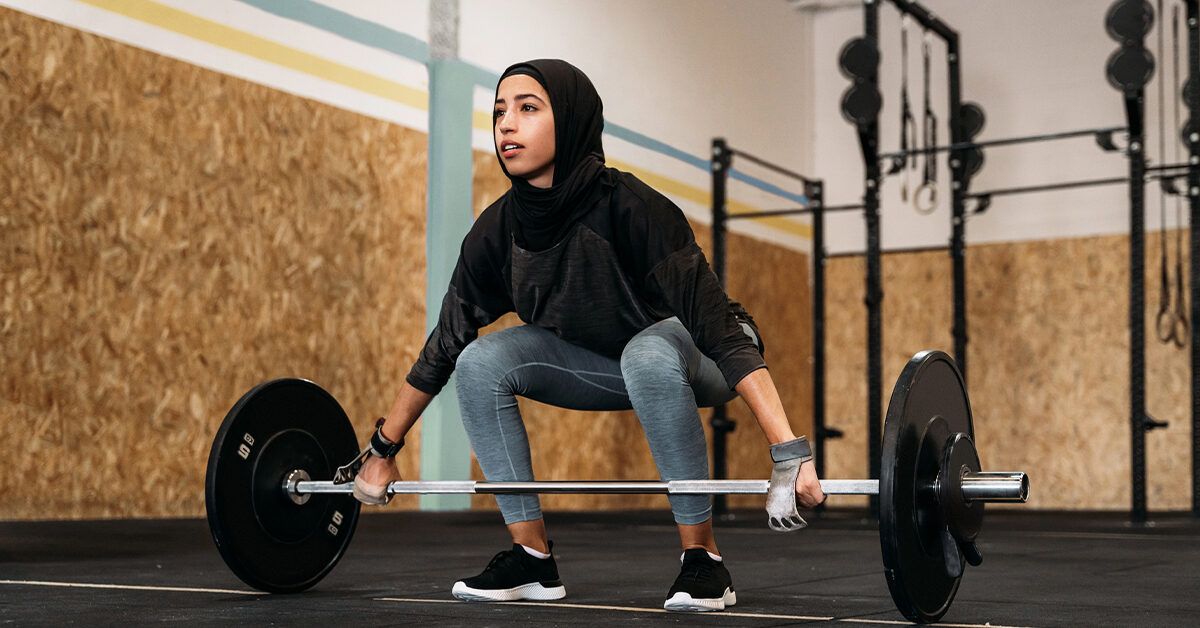
During the actual test, maintain strict technical standards. If your form breaks down—if your hips rise too fast in a squat or your back arches excessively on the bench—the lift does not count. The goal is to establish a safe lifting capacity assessment that you can actually use for future programming.
Estimating 1RM: The Brzycki and Epley Formulas
For many athletes, especially those training alone or recovering from minor tweaks, a direct maximal test is not always the best choice. This is where submaximal loading comes into play. You can effectively determine your peak strength by lifting a lighter weight for more repetitions and then applying a mathematical model.
The two most prominent models are the Brzycki formula and the Epley equation. Research indicates that estimated 1-repetition maximum formulas such as Epley and Brzycki are most accurate when performed within a range of 1 to 10 repetitions, typically yielding results within 5% to 10% of an individual's actual tested maximum.
The Brzycki formula is often preferred for its accuracy in the 5 to 10 rep range: Weight / (1.0278 - (0.0278 x reps)).
If you can bench press 225 pounds for 5 clean repetitions, the calculation would look like this: 225 / (1.0278 - (0.0278 x 5)) = 253 pounds.
Using these equations helps you avoid the massive CNS fatigue associated with a true maximal effort. Below is a quick reference table to help you with estimating 1rm from repetition max charts based on common percentages.
| Repetitions Performed | Percentage of 1RM |
|---|---|
| 1 | 100% |
| 2 | 95% |
| 4 | 90% |
| 6 | 85% |
| 8 | 80% |
| 10 | 75% |
| 12 | 70% |
Programming for Growth: Using Your 1RM Percentages
Once you have your number, the real work begins. The primary benefit of 1 rep max testing is the ability to implement strength training percentage based programming. This allows you to target specific physiological outcomes with surgical precision.
If your goal is muscle growth, you should focus on strength training percentages for muscle hypertrophy, which typically fall between 70 and 80 percent of your 1RM. In this zone, you are generating enough mechanical tension and metabolic stress to trigger protein synthesis without completely frying your nervous system. For those chasing absolute force production, you must spend time in the 85 to 95 percent range. A systematic review found that performing a single set of multi-joint exercises at 70% to 85% of 1RM, two to three times per week, can produce significant increases in maximal strength for resistance-trained individuals over 8 to 12 weeks.
However, rigid percentages can be a double edged sword. This is where Rate of Perceived Exertion or RPE becomes a vital tool. If your program calls for 80 percent of your 1 rep max but you only slept four hours, that 80 percent might feel like a 100 percent effort. By adjusting training loads based on 1rm percentages combined with RPE, you ensure that the training volume remains productive rather than destructive.
Editorial Tip: Think of your 1RM as a compass, not a destination. Use it to stay on course, but allow your daily readiness to dictate the actual speed of the journey.
Safety Standards and Essential Gear
Lifting at your absolute limit carries inherent risks. To mitigate these, you must have the right environment and essential safety gear for max strength testing. First and foremost, never attempt a true 1 rep max without a spotter. A competent spotter provides more than just physical help if you fail; they provide the psychological confidence required to exert maximal force.
As you move into intensities exceeding 80 percent of your 1 rep max, a lifting belt becomes a valuable tool. A belt helps increase intra-abdominal pressure, which stabilizes the spine and allows for better force transfer through the torso. While it is not a substitute for core strength, it is an essential piece of equipment for heavy compound movements.
Finally, be mindful of CNS fatigue. True maximal testing is taxing on the brain as much as the brawn. If you find your sleep is disrupted or your motivation plummets following a test, you likely haven't recovered. This is why you should only test your 1 rep max every 8 to 12 weeks. Testing more frequently leads to diminishing returns and increases the likelihood of a technical failure that could result in injury.
FAQ
How do you calculate your 1 rep max without lifting the full weight?
You can use submaximal testing by lifting a weight you can handle for 2 to 10 repetitions until failure. Once you have the weight and the number of reps, apply a formula like the Brzycki equation: Weight / (1.0278 - (0.0278 x reps)). This provides an estimated maximum that is usually within 5 to 10 percent of your actual capacity.
How often should you test your 1 rep max?
For most intermediate to advanced lifters, testing every 8 to 12 weeks is ideal. This timeframe allows for a full training cycle of progressive overload to take place and ensures that you have enough time to recover from the high central nervous system fatigue that follows a maximal effort.
Is testing a 1 rep max safe for beginners?
Generally, beginners do not need to perform a true 1 rep max test. Because their neuromuscular coordination is still developing, their strength increases rapidly from week to week. Beginners are better off using a 10 rep max to estimate their strength, which provides a safe lifting capacity assessment while they focus on mastering proper technique.
How do you warm up properly for a 1 rep max attempt?
A proper warm up should be progressive and specific. Start with dynamic stretching and light cardio, then move to the specific lift. Perform sets of 5 reps at 50%, 3 reps at 70%, and single reps at 80% and 90% of your target weight. This primes the nervous system without causing premature muscle fatigue.
Why is it important to know your 1 rep max?
Knowing your 1 rep max is the only way to accurately implement percentage based programming. It allows you to ensure you are lifting with the correct intensity for your goals, whether that is 70 to 80 percent for hypertrophy or 85 to 95 percent for maximal strength development. It replaces guesswork with data driven training.