Quick Facts
- The Golden Rule: Aim for 10 to 20 hard sets per muscle group per week to maximize growth without overtraining.
- Sleep Threshold: Secure 7 to 9 hours of quality sleep to facilitate the hormonal environment necessary for tissue repair.
- Protein Target: Consume 0.7 to 1.0g of protein per pound of body weight daily to provide the raw materials for myofibrillar repair.
- Recovery Window: Muscle protein synthesis rates peak at approximately 109% increase about 24 hours post-training.
- Supplement Baseline: Use 5g of creatine monohydrate and clinically dosed post-workout formulas to accelerate the reduction of muscle damage.
- Active Recovery: Prioritize 8,000 to 10,000 daily steps over complete sedentary rest to improve systemic blood flow and nutrient delivery.
Muscle recovery is the engine of hypertrophy; without it, training is just breakdown. Scientific research shows that muscle protein synthesis peaks 24 hours post-workout, requiring a specific triad of sleep, nutrition, and load management to turn microtrauma into new tissue. Effective muscle recovery is achieved by balancing training intensity with adequate caloric surplus, 7 to 9 hours of sleep, and high protein intake to facilitate muscle protein synthesis and myofibrillar repair. Managing systemic fatigue through strategic deloads ensures long-term hypertrophy.
The Triad of Recovery: Sleep, Calories, and Protein
In the world of muscle hypertrophy science, we often get distracted by the latest massage guns or compression boots. While those tools have their place, they represent the final 5% of your results. The heavy lifting of recovery happens through three non-negotiable pillars: sleep, total caloric intake, and protein timing. If these aren't locked in, you are effectively leaving gains on the table every time you leave the gym.
Sleep is your body's primary anabolic state. During deep sleep cycles, the body releases a surge of growth hormone and coordinates the complex process of myofibrillar repair. Without 7 to 9 hours of shut-eye, your cortisol levels remain elevated, which actively inhibits muscle protein synthesis and shifts your metabolism toward a catabolic state. Think of sleep as the window where the blueprints you drew up in the gym actually get built into a structure.
From a nutritional standpoint, muscle recovery requires energy. You cannot repair a house without building materials and the fuel to power the cranes. A caloric surplus provides the metabolic energy needed to drive the chemically expensive process of building new muscle tissue. Within this surplus, protein intake requirements for muscle repair are paramount. You should aim for 30 to 50 grams of high-quality protein per meal, ensuring a steady stream of leucine to trigger the mTOR pathway—the body's master switch for growth.
Furthermore, we must address glycogen resynthesis. After a grueling session, your muscles are depleted of their primary fuel source. Implementing a 4:1 carbohydrate-to-protein ratio in your post-workout window can accelerate the replenishment of muscle glycogen. This doesn't just fuel your next workout; it creates a cellular environment that signals the body it is safe to begin the repair process.
Training Mechanics: Balancing Intensity and Volume
One of the most common mistakes I see in experienced lifters is the confusion between training hard and training effectively. To master muscle hypertrophy science, you must understand the relationship between mechanical tension and systemic fatigue. Every set you perform creates a stimulus for growth, but it also adds to a "fatigue debt" that your central nervous system must eventually pay back.
The 10-20 set rule is a science-based benchmark for volume. Research suggests that for most natural lifters, performing fewer than 10 hard sets per muscle group per week provides a sub-optimal stimulus, while exceeding 20 sets often leads to diminishing returns and excessive metabolic stress. By staying within this range, you ensure that you are creating enough microtrauma to spark growth without overwhelming your body's ability to recover.
Building a recovery routine for hypertrophy also involves controlling the tempo of your lifts. I recommend a 4-1-1-0 tempo:
- 4 seconds for the eccentric (lowering) phase to maximize mechanical tension.
- 1 second pause at the bottom to eliminate momentum.
- 1 second for the concentric (lifting) phase.
- 0 seconds of rest at the top.
This controlled approach ensures that the tension stays on the muscle tissue rather than the joints, reducing the risk of injury and specific types of connective tissue inflammation that can sideload your progress.
Finally, you must respect the deload. Every 4 to 8 weeks, you should implement a strategic deload by reducing your total training volume by 40 to 50%. This isn't "taking a week off"; it is a planned reduction in stress that allows systemic fatigue to dissipate while maintaining your hard-earned adaptations. Without these periods of active rest, you eventually hit a wall where performance stalls and delayed onset muscle soreness becomes chronic rather than acute.

The Chemistry of Repair: Effective Supplementation
While supplements won't replace a poor diet or lack of sleep, the right clinical formulations can significantly narrow the recovery gap. When looking for the best post workout recovery supplements 2026, we look for ingredients that have survived the rigors of peer-reviewed scrutiny.
Creatine monohydrate remains the gold standard. Beyond its well-known role in ATP production and strength, creatine helps reduce muscle damage and inflammation following intense resistance training. A daily dose of 5g ensures your muscle cells are fully saturated, providing a more robust environment for post workout muscle repair.
Another powerhouse ingredient is L-carnitine L-tartrate. This specific form of carnitine has been shown in multiple studies to reduce the biochemical markers of muscle damage and the perceived severity of muscle soreness. It works by increasing the density of androgen receptors on muscle cells, potentially making the body more efficient at using its own natural hormones for repair.
Safety Warning: Be wary of trendy "testosterone boosters" containing ingredients like Fadogia Agrestis. Unlike the foundational supplements discussed here, many of these herbs lack long-term human safety data and can even be toxic to the liver and kidneys at high doses. Stick to ingredients with deep clinical backing.
For a comprehensive approach, look at formulations like Legion Recharge. It provides the exact clinical doses of creatine and L-carnitine L-tartrate needed to move the needle on recovery.
| Supplement | Clinical Dose | Primary Recovery Benefit |
|---|---|---|
| Creatine Monohydrate | 5g | Reduces cellular damage and boosts power output |
| L-Carnitine L-Tartrate | 2g | Decreases soreness and improves receptor sensitivity |
| Whey/Plant Protein | 25-40g | Provides essential amino acids for synthesis |
| Omega-3 Fish Oil | 2-3g | Manages systemic inflammation |
| Corosolic Acid | 10mg | Improves nutrient absorption and glucose transport |
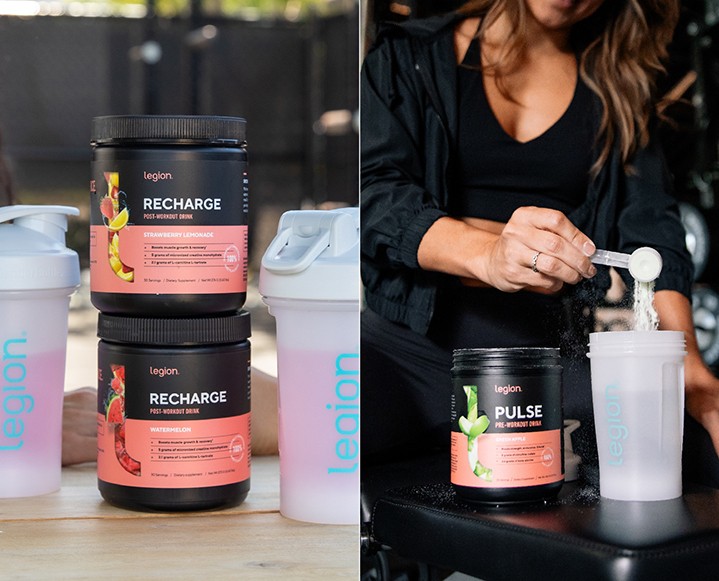
Legion focuses on transparent, science-backed formulations to help athletes maximize their hypertrophy potential. By avoiding proprietary blends and using effective doses, they provide the specific chemistry required to support the myofibrillar repair process.

Advanced Modalities: Active Recovery and Fatigue Management
The final piece of the muscle recovery puzzle is how you handle your time outside the gym. Many lifters think that "rest" means sitting on the couch for 48 hours. However, science-based muscle recovery strategies often favor active recovery over total inactivity.
Low-intensity activity, such as hitting 8,000 to 10,000 steps per day, acts as a "circulatory pump." It keeps blood moving through the muscle tissues without adding significant metabolic stress. This increased blood flow helps flush out metabolic byproducts like lactate and delivers fresh nutrients to the areas that need repair.
We also need to consider the circadian rhythm for hormone optimization. Your body operates on an internal clock that dictates the release of hormones like testosterone and growth hormone. By maintaining a consistent sleep-wake cycle and getting sunlight exposure in the morning, you align your internal biology with your training goals. This management of the circadian rhythm is a powerful tool for cortisol management, ensuring your stress hormones drop low enough at night to allow for tissue regeneration.
While tools like hydrotherapy and cold plunges are popular, they should be used with caution. Research suggests that while cold water immersion is excellent for reducing acute inflammation and soreness, using it too close to a hypertrophy-focused workout can actually blunt the inflammatory signal required for muscle growth. If your goal is maximum size, save the ice baths for your off days or use contrast therapy instead.
FAQ
How long does it take for muscles to recover after a workout?
For most heavy resistance training sessions, muscle protein synthesis rates can increase by approximately 109% about 24 hours after the bout. While the metabolic environment returns to baseline within 36 to 48 hours, full structural repair and systemic nervous system recovery can take anywhere from 48 to 72 hours depending on the intensity and volume of the session.
What is the fastest way to speed up muscle recovery?
The fastest way is a "fundamentals-first" approach: consuming a high-protein meal with carbohydrates immediately post-workout, ensuring 8 hours of sleep, and maintaining hydration. Supplementing with 5g of creatine monohydrate and 2g of L-carnitine L-tartrate can further accelerate the reduction of muscle damage and soreness.
Do cold showers or ice baths actually help muscles recover?
Cold showers and ice baths are effective at reducing the sensation of muscle soreness and systemic inflammation. However, for those focused strictly on hypertrophy, cold immersion can dampen the anabolic signaling pathways if used immediately after training. It is best used during high-frequency competition phases rather than during a primary muscle-building block.
How many hours of sleep are needed for muscle repair?
Clinical guidelines for athletes suggest 7 to 9 hours of quality sleep per night. Going below the 7-hour threshold has been shown to decrease protein synthesis and increase muscle degradation due to higher cortisol levels and reduced growth hormone secretion.
What supplements are most effective for muscle recovery?
The most effective supplements for muscle recovery include whey or plant protein for amino acid supply, creatine monohydrate for cellular energy and damage reduction, and L-carnitine L-tartrate for reducing post-exercise soreness. Omega-3 fatty acids are also highly effective for managing the systemic inflammation that follows heavy training cycles.