Our Top Picks
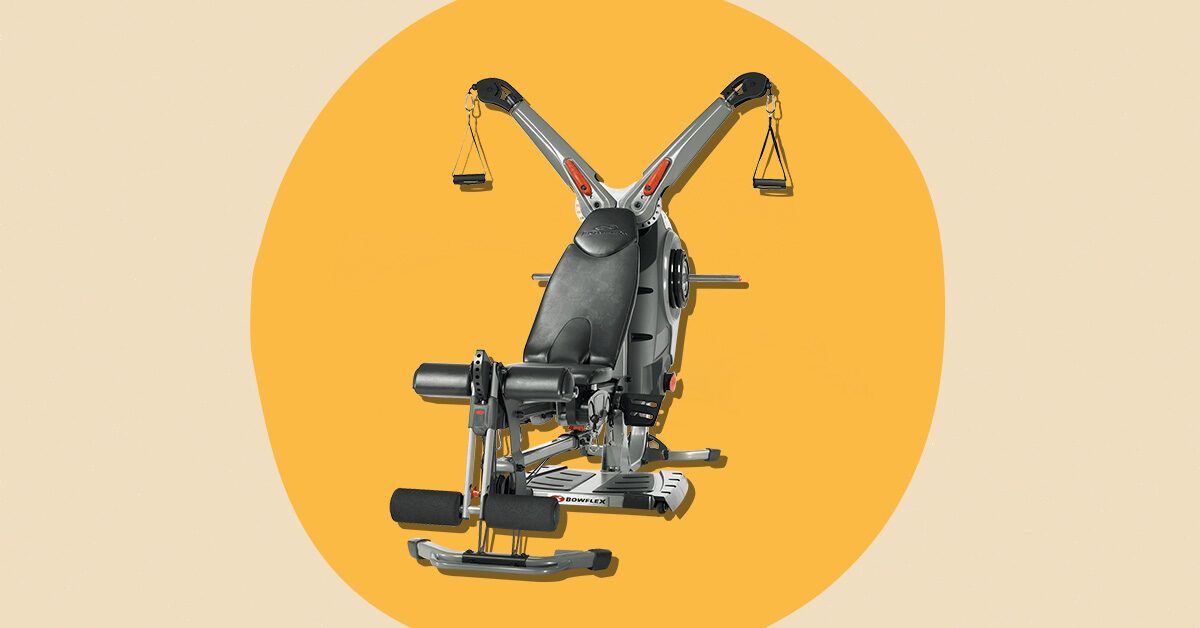
- Top Pick: Bowflex Revolution for versatility (100+ exercises). This machine is the gold standard for incorporating SpiraFlex technology into a home setting, providing a comprehensive alternative to a full rack of dumbbells.
- Best for Muscle Gain: SpiraFlex plate upgrade. For those looking to push their limits, upgrading the resistance up to 300 lbs ensures you can maintain progressive overload for compound movements.
- Direct Answer: SpiraFlex technology uses elastomer disks to provide smooth, weightless resistance training that mimics free weights without gravity-based inertia. Originally developed for NASA to maintain astronaut muscle mass in zero-gravity environments, it offers constant tension throughout the entire range of motion, allowing home athletes to achieve significant muscle hypertrophy and strength gains without the bulk of traditional iron plates.
SpiraFlex technology utilizes elastomer disks to provide resistance without relying on gravity or heavy weights. Originally developed for NASA to maintain astronaut muscle mass in zero-gravity environments, it offers constant tension throughout the entire range of motion. This allows home athletes to achieve progressive overload and muscle hypertrophy using a compact, lightweight system like the Bowflex Revolution. By removing the reliance on gravity, the SpiraFlex home gym creates a unique environment where the resistance remains consistent regardless of how fast or slow you move the handles.
The NASA Legacy: From Zero-G to Your Living Room
When we talk about sports science, few stories are as compelling as the transition of aerospace engineering into the home gym. In the late 1990s, NASA faced a significant challenge: how to prevent the musculoskeletal degradation of astronauts living on the International Space Station. In a microgravity environment, traditional weights are useless because they weigh nothing. To solve this, Paul Francis invented SpiraFlex, which was subsequently used in the Interim Resistive Exercise Device (IRED).
The effectiveness of this technology is not just anecdotal. A 16-week NASA-sponsored study concluded that resistance training with SpiraFlex technology provides muscle and strength gains comparable to those achieved with traditional free weights. This study proved that the body does not necessarily need the pull of gravity to stimulate muscle growth; it needs tension. Specifically, the technology served as the primary countermeasure for musculoskeletal degradation on the International Space Station for nine years, from 2000 to 2009.
For the home athlete, this means your equipment is born from the most extreme testing environment possible. If it can keep an astronaut’s bone density and muscle mass intact while orbiting the Earth, it is more than capable of helping you hit your hypertrophy goals in your spare bedroom. This NASA technology provides the foundation for what we now call weightless resistance training, a category that is redefining the footprint of high-performance home fitness.
Linear Resistance vs. Progressive Tension: Why It Matters
In the world of home gyms, not all resistance is created equal. Most people are familiar with resistance bands or the Bowflex Power Rod system. These rely on progressive tension, meaning the further you stretch the band or bend the rod, the harder it gets. While effective for some goals, it creates a resistance curve that is very different from lifting a barbell.
SpiraFlex resistance technology operates on a linear resistance profile. Inside each disc, elastomer straps are wrapped around a central hub. As you pull, these straps engage in a way that provides a flat resistance curve. This means 20 pounds of resistance feels like 20 pounds at the beginning, middle, and end of the movement. This is a critical distinction for anyone serious about benefits of weightless resistance training for home athletes.
| Feature | SpiraFlex (Linear) | Power Rods / Bands (Progressive) |
|---|---|---|
| Resistance Curve | Flat and consistent | Increases throughout the movement |
| Muscle Engagement | Consistent Time Under Tension | Peak tension only at full extension |
| Inertia | Zero (No momentum) | Zero (No momentum) |
| Feel | Mimics Free Weights | Mimics Elastic Tension |
| Best For | Hypertrophy & Strength | Conditioning & Toning |
When comparing SpiraFlex and Power Rods resistance systems, the linear nature of SpiraFlex allows for better eccentric control. In traditional lifting, the eccentric (lowering) phase is where much of the muscle damage—and subsequent growth—occurs. Because SpiraFlex maintains its load even when the "weight" is moving back toward the machine, your muscles stay under tension longer. This lack of inertia is the secret sauce. In a traditional gym, you can use momentum to "swing" a dumbbell up. With a SpiraFlex home gym, there is no momentum to help you. Every inch of every rep is earned.
SpiraFlex vs. Free Weights: The Muscle Hypertrophy Debate
The most common question I get from seasoned lifters is whether you can truly build serious mass without iron. The SpiraFlex vs free weights for muscle hypertrophy debate often comes down to the physics of tension. Your muscles do not have eyeballs; they cannot tell the difference between a 45-pound iron plate and an elastomeric disc providing 45 pounds of torque. They only respond to the mechanical stress and metabolic fatigue applied to the fibers.
One of the primary differences when evaluating SpiraFlex vs free weights is the elimination of the "sticking point" caused by gravity. With free weights, the resistance changes based on the angle of your joints relative to the ground. In a bicep curl, the load is heaviest when your forearm is parallel to the floor and lightest at the top. With Bowflex Revolution resistance technology, the resistance is directed through cables, meaning you can maintain an optimal resistance angle throughout the entire movement.
Furthermore, SpiraFlex home gym equipment for injury prevention is a major selling point. Because there is no heavy mass to move, there is no downward force pressing on your joints at the end of a rep. If you have a history of shoulder or back issues, weightless resistance training provides a much smoother experience. You get the benefits of progressive overload without the jarring impact often associated with clanging plates. It is a safer, more controlled environment that allows for functional hypertrophy without the high injury risk of solo heavy lifting.
Practical Training: Bowflex Revolution in Small Spaces
The brilliance of the SpiraFlex system is how it packs an entire commercial gym into a footprint that fits in a corner. If you were to buy a full set of dumbbells and a squat rack, you would need a dedicated garage. Setting up a SpiraFlex home gym in small spaces is far more manageable. The Bowflex Revolution, which utilizes this technology, allows for over 100 different exercises using a single set of discs and a versatile pulley system.
When learning how to use Bowflex Revolution for total body workouts, the key is the quick-change nature of the discs. You can move from a bench press to a seated row to leg extensions in seconds. This makes it ideal for circuit training or high-intensity resistance training (HIRT), which is excellent for both muscle preservation and fat loss.
Technical Spec Box: Bowflex Revolution
- Technology: SpiraFlex Elastomeric Resistance
- Standard Resistance: 220 lbs (Upgradable to 300 lbs)
- Exercise Count: 100+
- Active Workout Area: 148" x 134"
- Folded Dimensions: 55" x 38"
- Special Features: Freedom Arms, Leg Press Station, Built-in Rowing Machine
For the solo lifter safety is a paramount concern. We have all had that moment of hesitation before a heavy bench press without a spotter. On a SpiraFlex home gym, that fear is gone. If you reach muscular failure, you simply let go or return the handles to the starting position. There is no risk of being crushed by a barbell. This psychological safety allows you to train closer to failure, which is a key driver for muscle growth.
Maintenance and Longevity: Protecting Your Investment
A common concern with any non-traditional resistance system is how long it will last. Traditional steel springs or elastic bands eventually lose their tension or snap. SpiraFlex was designed for the rigors of space travel, and that durability carries over to the consumer version.
The SpiraFlex elastomeric disks have been laboratory tested to withstand over 2.5 million cycles at full power without failure. To put that into perspective, that is more than ten times the life expectancy of traditional steel springs. You would have to work out every single day for decades to even come close to that limit.
To keep your system running smoothly, follow these simple maintenance tips:
- Disc Care: Keep the discs clean and free of dust. If they become grimy, a simple wipe with a damp cloth is usually enough.
- Cable Inspection: Regularly check the cables for any signs of fraying. While high-tension, they are the primary moving part and should be treated with care.
- Rail Lubrication: If your machine includes a rowing or leg press sliding seat, ensure the rails stay clear of debris to maintain that smooth, frictionless feel.
By focusing on these small details, your investment in NASA technology will continue to deliver results for years, providing a consistent and reliable platform for your strength training journey.
FAQ
What is SpiraFlex resistance technology?
SpiraFlex is a patented resistance method that uses elastomer discs rather than weights or elastic bands. As the discs are rotated, the internal straps provide a linear resistance that mimics the feel of free weights. It was originally designed for NASA to provide a way for astronauts to perform heavy strength training in zero-gravity environments where traditional weights have no mass.
How does SpiraFlex compare to lifting free weights?
The primary difference is the lack of inertia. Free weights rely on gravity and can be moved using momentum, which often takes the stress off the target muscle. SpiraFlex provides constant resistance throughout the entire range of motion, ensuring that the muscle stays under tension during both the concentric and eccentric phases. While free weights require a spotter for safety at high loads, SpiraFlex is inherently safe for solo lifters.
Can you build muscle using a SpiraFlex home gym?
Yes, you can absolutely build muscle. Muscle growth is driven by progressive overload, time under tension, and metabolic stress. Because SpiraFlex provides linear resistance and allows for high-weight settings (up to 300 lbs on the Bowflex Revolution), it provides all the necessary stimuli for hypertrophy. A NASA study confirmed that the strength gains from this technology are comparable to those from traditional weightlifting.
Is a SpiraFlex home gym suitable for beginners?
It is arguably one of the best systems for beginners. The smooth, controlled motion of the cables helps users maintain proper form and reduces the risk of joint injury. Since there are no heavy plates to balance or drop, beginners can focus entirely on the mind-muscle connection and learning the mechanics of different exercises without the intimidation factor of a traditional weight room.
Does SpiraFlex provide constant resistance throughout the movement?
Yes, this is the defining characteristic of the technology. Unlike resistance bands or rods that get progressively harder as they are stretched, SpiraFlex maintains a consistent resistance level from the start of the rep to the finish. This linear profile ensures that your muscles are working just as hard at the beginning of a movement as they are at the peak contraction.