Quick Facts
- Top Pick for Potency: Tirzepatide, demonstrating a mean weight reduction of up to 22.5% in clinical trials.
- Top Pick for Cardiovascular Support: Semaglutide, which has shown a 20% reduction in major adverse cardiovascular events (MACE).
- Primary Mechanism: Semaglutide acts as a single GLP-1 receptor agonist; newer weight loss peptides like tirzepatide and retatrutide utilize multi-receptor pathways involving GIP and glucagon.
- Standard Titration: Semaglutide typically begins at a 0.25mg dose and scales to a 2.4mg maintenance dose.
- Pricing Snapshot: Branded semaglutide options currently retail for approximately $1,349 per month without insurance.
- Primary Advantage of Multi-Receptor Peptides: Enhanced reduction of visceral adipose tissue and improved insulin sensitivity compared to single-agonist options.
As we move into 2026, the landscape of obesity treatment has shifted from simple GLP-1 receptor agonists to sophisticated multi-receptor peptides. Choosing between semaglutide vs peptides requires understanding their distinct metabolic pathways. Semaglutide is a selective GLP-1 receptor agonist that mimics natural satiety signals to manage appetite and improve metabolic health, whereas newer multi-receptor options leverage combined hormonal pathways to accelerate fat loss.
The Mechanism: Single vs. Multi-Receptor Peptides
To understand the weight loss peptide therapy comparison, we must first look at the pharmacology. For years, semaglutide was the gold standard. It functions as a GLP-1 receptor agonist, essentially mimicking the glucagon-like peptide-1 hormone that your gut naturally releases after eating. This hormone slows gastric emptying and sends signals to the brain that you are full. It is an incredibly effective tool for satiety signaling, but it operates through a single channel.
The next generation of weight loss peptides has evolved into multi-receptor agonists. Tirzepatide, for instance, is a dual-agonist. It targets the GLP-1 receptor but adds GIP receptor activity (glucose-dependent insulinotropic polypeptide). While GLP-1 focuses heavily on the brain’s hunger centers and the stomach, GIP appears to act more directly on adipose tissue, potentially improving how the body stores and breaks down fat.
Even more advanced are the triple-agonist therapies like retatrutide. These peptides target GLP-1, GIP, and glucagon receptors. By adding glucagon receptor activation, these compounds may increase energy expenditure—effectively boosting the metabolic rate while simultaneously suppressing appetite. This sophisticated metabolic regulation is designed to address obesity from multiple angles, making the choice between semaglutide vs peptides a matter of matching the tool to the patient’s specific metabolic resistance.
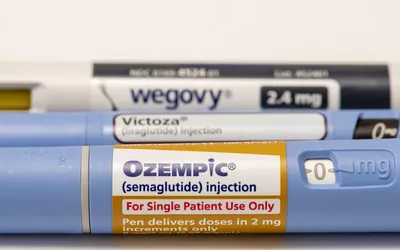
Potency Hierarchy: Comparing Clinical Results 2026
When evaluating the clinical results of weight loss peptides, the data points to a clear hierarchy of efficacy. While semaglutide remains a highly effective standard for weight management, multi-receptor peptides often yield greater total body mass reduction. This is particularly evident when looking at the reduction of visceral adipose tissue, the dangerous "belly fat" that surrounds internal organs.
Recent data from 2026 indicates that the more receptors a peptide targets, the more significant the weight loss. In the STEP 1 clinical trial, participants without type 2 diabetes who received a once-weekly 2.4 mg dose of semaglutide alongside lifestyle interventions achieved an average body weight reduction of 14.9% over 68 weeks. This was a landmark result, but it has since been surpassed by dual-agonists.
Clinical trial data for tirzepatide, a dual GLP-1 and GIP receptor agonist peptide, showed a mean weight loss of up to 22.5% at 72 weeks, which exceeds the weight reduction averages typically reported for single GLP-1 agonists like semaglutide. Furthermore, emerging data for retatrutide suggests weight loss averages can climb as high as 24.1%, approaching the results traditionally only seen with bariatric surgery.
Comparison Table: Potency and Efficacy
| Peptide | Mechanism | Avg. Weight Loss | Clinical Trial |
|---|---|---|---|
| Liraglutide | Single GLP-1 | ~8% | SCALE |
| Semaglutide | Single GLP-1 | 14.9% | STEP 1 |
| Tirzepatide | Dual GLP-1/GIP | 22.5% | SURMOUNT-1 |
| Retatrutide | Triple GLP-1/GIP/GCG | 24.1% | Phase 2 Data |
For many patients, understanding the difference between single and multi-receptor weight loss peptides is the key to breaking through a weight loss plateau. While semaglutide is excellent for many, those with a higher BMI or complex metabolic syndromes often find better success with tirzepatide or retatrutide. These newer options show superior efficacy in improving insulin resistance and reducing waist circumference.

Safety Profiles and the Muscle Loss Trade-off
Safety and side effects of peptides for weight loss are a major consideration for any longevity-focused individual. Both semaglutide and the newer multi-receptor peptides share a similar profile of gastrointestinal side effects. These include nausea, vomiting, constipation, and delayed gastric emptying. Because these drugs slow down the digestive tract, the body needs time to adjust, which is why a slow dosage titration is essential.
A critical concern in the longevity community is the risk of sarcopenia, or muscle loss. When weight is lost rapidly, the body often sheds lean body mass along with fat. In some GLP-1 trials, up to 40% of the weight lost was estimated to be lean mass. This is why lean body mass preservation must be a priority. To mitigate this, patients should focus on high protein intake and resistance training while undergoing therapy.
When comparing the safety comparison of GLP-1 agonists vs newer weight loss peptides, semaglutide has the most robust long-term data regarding cardiovascular safety. The SELECT trial demonstrated that semaglutide reduced the risk of heart attacks and strokes in patients with pre-existing heart disease. While tirzepatide and others show promising metabolic markers, semaglutide currently holds the edge for patients whose primary concern is cardiovascular risk.

Dosage, Titration, and Cost Comparison
The practical application of these therapies involves a strictly managed titration schedule. You cannot simply start at the maximum dose, as the gastrointestinal system would be overwhelmed. For semaglutide, the titration typically takes several months to reach the therapeutic dose of 2.4mg.
Standard Titration Schedule for Semaglutide
| Month | Weekly Dose | Goal |
|---|---|---|
| Month 1 | 0.25 mg | Introduction & GI Assessment |
| Month 2 | 0.5 mg | Incremental Increase |
| Month 3 | 1.0 mg | Metabolic Adjustment |
| Month 4 | 1.7 mg | Pre-Maintenance |
| Month 5+ | 2.4 mg | Full Therapeutic Dose |
When asking how to choose between semaglutide and other weight loss peptides, cost often becomes the deciding factor. The wholesale acquisition cost of branded semaglutide (Wegovy) is around $1,349 per month. Tirzepatide (Zepbound) is priced similarly, though some insurance providers have begun to favor one over the other based on negotiated rebates.
Both classes of drugs generally require subcutaneous administration once per week. This involve a small needle, usually in the abdomen or thigh. While oral versions are in development, the injectable format remains the most bioavailable and effective method for ensuring the incretin mimetics reach the bloodstream consistently.

Long-Term Maintenance and Sustainability
A major challenge with semaglutide and newer peptides is the "rebound" effect. Clinical data suggests that many patients regain a significant portion of their lost weight once they discontinue the medication. This highlights the importance of long term weight maintenance semaglutide vs other peptides strategies.
To maintain results, the medication should be viewed as a "primer" that allows for lifestyle changes. This includes:
- Focusing on NEAT: Increasing non-exercise activity thermogenesis (walking, moving, standing) to keep the metabolic rate high.
- Habit Formation: Using the period of suppressed appetite to learn portion control and nutrient-dense food selection.
- Tapering Plans: Some clinicians are exploring "maintenance doses" where the patient takes a lower dose or increases the interval between injections rather than stopping abruptly.
Comparing semaglutide and retatrutide efficacy for obesity shows that while the latter may drop more weight, the behavioral requirements for keeping that weight off remain the same. Without a fundamental shift in metabolic health habits, the weight loss provided by any peptide therapy may be temporary.

FAQ
Is semaglutide considered a peptide?
Yes, semaglutide is a peptide. Specifically, it is a synthetic analog of the naturally occurring peptide hormone GLP-1. It is designed with a modified side chain that allows it to resist degradation by enzymes in the body, giving it a much longer half-life than the hormone your body produces naturally.
What is the difference between semaglutide and other weight loss peptides?
The primary difference lies in the number of receptors they target. Semaglutide is a single-receptor agonist focusing only on GLP-1. Newer peptides like tirzepatide target two receptors (GLP-1 and GIP), while others like retatrutide target three (GLP-1, GIP, and glucagon), often leading to more significant weight loss and metabolic improvements.
Which is more effective for fat loss, semaglutide or peptides?
While semaglutide is technically a peptide, it is often compared to newer multi-receptor peptides like tirzepatide. Clinical data consistently shows that multi-receptor peptides are more effective for total fat loss. Tirzepatide achieved up to 22.5% weight loss in trials, whereas semaglutide averaged around 14.9%.
What are the most common side effects of semaglutide vs peptides?
Both semaglutide and multi-receptor peptides share similar gastrointestinal side effects. Nausea is the most common, followed by diarrhea, constipation, and stomach pain. These side effects are usually most prominent during the titration phase and tend to diminish as the body adjusts to the medication.
Are there better alternatives to semaglutide for weight loss?
For many, tirzepatide is considered a "better" alternative due to its higher efficacy in clinical trials. However, the first daily injectable, liraglutide, demonstrated a mean weight loss of approximately 8% over 56 weeks, making it a less potent but still viable option. The "best" choice depends on your individual health profile and goals.