Quick Facts
- Omega-3 Stability: Lipid percentages for EPA and DHA remain largely unchanged during smoking.
- Sodium Gap: Smoked salmon contains 600–1,200mg sodium per 100g vs. 75mg in fresh cooked salmon.
- B12 Powerhouse: A 100g serving of smoked salmon provides approximately 136% of the daily value for Vitamin B12.
- Protein Content: Comparable across both types, typically ranging from 18 to 22 grams per serving.
- Safety Threshold: The internal temperature for safe hot-smoked or cooked salmon is 145°F.
- Best Choice: Fresh cooked salmon is recommended for daily use; smoked salmon is best as an occasional high-density nutrient source.
Smoked vs cooked salmon both provide high levels of heart-healthy omega-3s, as the smoking process does not significantly reduce EPA and DHA content. However, cooked salmon is generally healthier for daily consumption due to its significantly lower sodium levels compared to salt-cured smoked varieties. While both offer excellent nutrient density, the preservation method determines how often each should appear on your plate.
Omega-3 Retention: Does Smoking Destroy the Fats?
Many health-conscious eaters worry that the heat or processing involved in preserving fish might degrade its most valuable components. However, when we look at the micronutrient science, the news is reassuring. The eicosapentaenoic acid (EPA) and docosahexaenoic acid (DHA) found in fatty fish are surprisingly resilient. Research indicates that the composition of omega-3 fatty acids as a percentage of total lipids remains unchanged during the smoking process. This means that whether you are eating a fresh grilled fillet or a slice of lox, you are still receiving the same anti-inflammatory benefits that support cardiovascular health.
The stability of these fats is due to the nature of the salmon’s lipid structure. Even though smoking involves heat in the case of hot-smoked varieties, it is usually lower than the temperatures used in high-heat frying. Lipid oxidation, which is the chemical breakdown of fats, is kept to a minimum during standard commercial smoking processes. On average, smoked salmon provides approximately 0.5 grams of combined eicosapentaenoic acid (EPA) and docosahexaenoic acid (DHA) per 100-gram serving.
When we discuss omega-3 retention in smoked vs cooked salmon, we are essentially looking at two different delivery systems for the same medicine. Cooked salmon might have a slightly higher bioavailability because the protein structure is fully denatured, making it easier for the body to break down and absorb the fats trapped within the muscle fibers. However, is smoked salmon a good source of omega-3 compared to fresh? Absolutely. The main difference isn't the fat itself, but the "package" of additives that comes with it.
The Sodium Trade-Off: Smoked Salmon Sodium Content
While the fat profile remains impressive, the salt profile is where these two versions of salmon diverge sharply. To prepare smoked salmon, the fish must first undergo a brining process. This involves curing the fish in salt to draw out moisture, which inhibits bacterial growth and creates that signature firm texture. While effective for preservation, this process introduces a massive amount of salt into the final product.
Smoked salmon contains between 600 and 1,200 mg of sodium per 100-gram serving, whereas an equivalent serving of fresh cooked salmon typically contains about 75 mg. For anyone managing hypertension or looking to protect their long-term cardiovascular health, this is a critical distinction. The Dietary Guidelines for Americans recommend limiting daily sodium to less than 2,300 mg, and some heart associations suggest staying closer to 1,500 mg. A single large bagel with a generous portion of smoked salmon can easily account for half of your daily allowance.
| Salmon Preparation Type | Sodium (mg) per 100g | Omega-3 EPA + DHA (g) | Primary Benefit |
|---|---|---|---|
| Fresh Baked / Broiled | ~75 mg | 0.5 - 1.0 g | Heart health, daily use |
| Hot-Smoked Salmon | 600 - 1,000 mg | ~0.5 g | High protein, flavor |
| Cold-Smoked (Lox) | 800 - 1,200 mg | ~0.4 g | Vitamin B12, convenience |
The impact of salt curing on salmon nutrition means that while you are getting your EPA and DHA, you are also taxing your kidneys and blood pressure. This is why fresh cooked salmon is almost always the better choice for regular, high-volume consumption.
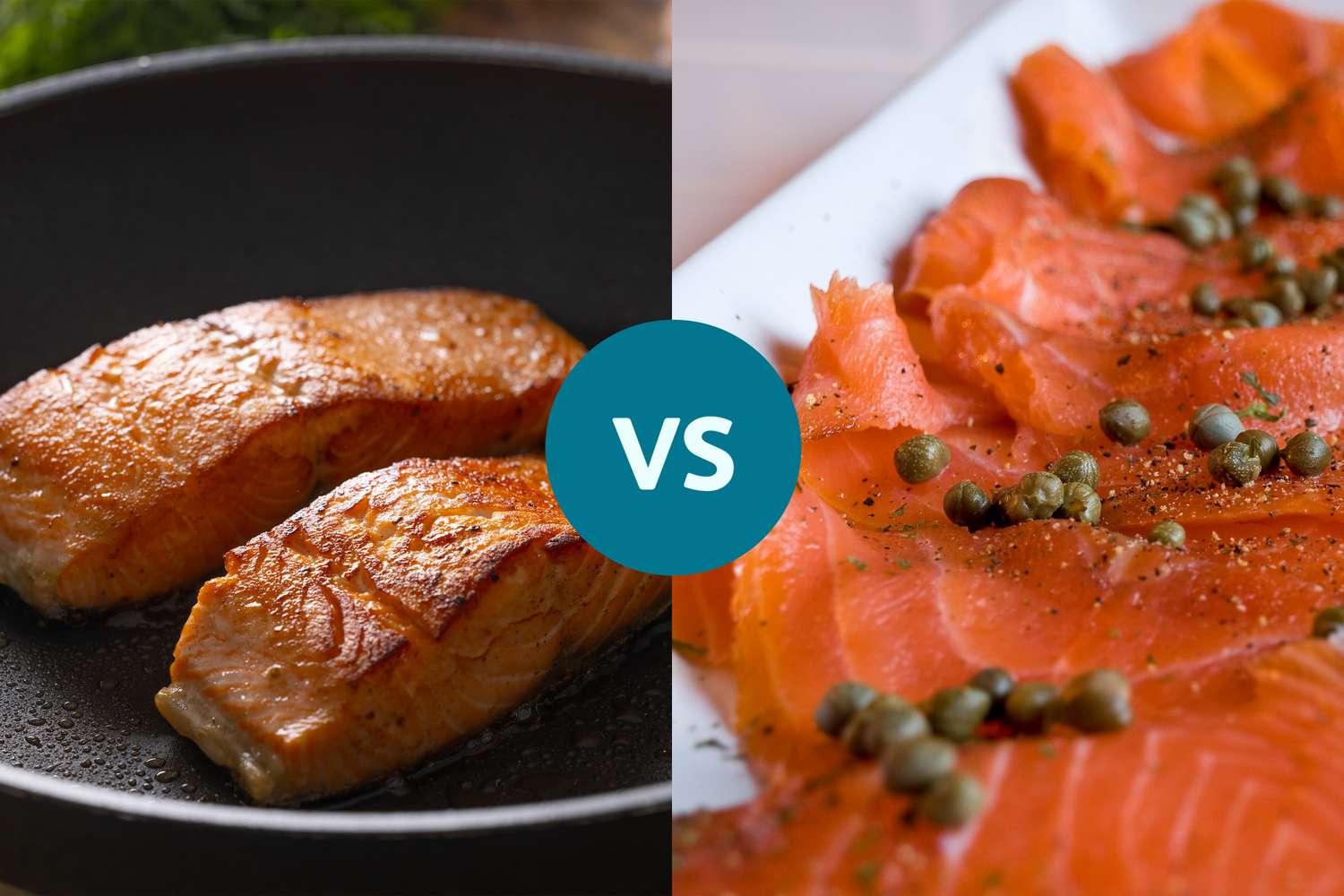
Processing Methods: Cold-Smoked vs. Hot-Smoked vs. Cooked
Understanding the health benefits of cooked vs smoked salmon requires a look at the thermal processing involved. Cold-smoking occurs at temperatures generally between 50°F and 90°F. The fish isn't actually "cooked" in the traditional sense; it is cured and flavored by smoke while remaining raw in texture. Hot-smoking, on the other hand, occurs at temperatures up to 145°F or higher, effectively cooking the fish while it is smoked.
Fresh cooked salmon is usually prepared at home using baking, broiling, or steaming. These methods allow for total control over ingredients. You can season with lemon and herbs instead of salt, maintaining a high nutrient density without the sodium baggage.
Safety Warning: Listeria and Raw Textures Cold-smoked salmon is considered a raw product. Because it is not heated to high temperatures, there is a small but present risk of Listeria monocytogenes. Pregnant women, the elderly, and immunocompromised individuals are generally advised to stick to hot-smoked or fresh cooked salmon that has reached an internal temperature of 145°F.
Maximizing Your Intake: Best Practices
If your goal is maximizing your daily omega-3 intake, consistency is more important than the specific preparation method. The Dietary Guidelines for Americans suggest eating at least 8 ounces of seafood per week. To achieve this without skyrocketing your blood pressure, it is best to make fresh fillets your staple.
The best way to cook salmon to preserve omega-3 is through gentle heating methods like baking or broiling. Avoid deep-frying, as the high temperatures and omega-6 rich frying oils can degrade the natural EPA and DHA and alter the healthy fat ratio of the fish. When choosing your fish, consider the source. Both wild-caught vs farm-raised salmon offer high levels of omega-3s, though wild-caught often has a more diverse mineral profile, while farm-raised can sometimes be higher in total fat content (and therefore total omega-3s).
Can you get enough omega-3 from smoked salmon alone? Technically, yes. Two servings of smoked salmon a week would meet the basic heart-health requirements for essential fatty acids. However, the cumulative effect of that much sodium could lead to water retention and cardiovascular strain. I recommend using smoked salmon as a "flavor booster"—think of it as a condiment for salads or a high-protein addition to a whole-grain cracker—rather than the main protein of your dinner.
FAQ
Is smoked salmon healthier than cooked salmon?
While smoked salmon is rich in vitamins like B12 and contains healthy omega-3 fats, cooked salmon is generally considered healthier for frequent consumption. This is primarily because cooked salmon provides the same protein and healthy fats without the high levels of sodium added during the curing process.
What is the main difference between smoked and cooked salmon?
The main difference lies in the preparation and preservation. Cooked salmon is heated to a high temperature to change its texture and kill bacteria. Smoked salmon is cured with salt and exposed to smoke for flavor and preservation, resulting in a much higher salt content and a different texture, ranging from silky and raw-like (cold-smoked) to flaky (hot-smoked).
Is smoked salmon higher in sodium than cooked salmon?
Yes, smoked salmon is significantly higher in sodium. Due to the brining process, smoked salmon can contain up to 15 times more sodium than a fresh fillet. A standard 100-gram serving of smoked salmon can have over 1,000 mg of sodium, while fresh cooked salmon contains only about 75 mg.
Can you eat smoked salmon without cooking it?
Cold-smoked salmon is typically eaten "raw" or as-is because the salt-curing and smoking process preserves it. Hot-smoked salmon is already fully cooked during the smoking process and can also be eaten without further preparation. However, those in high-risk groups for foodborne illness should ensure their salmon has been heated to 145°F.
Is it safe to eat smoked salmon every day?
Eating smoked salmon every day is generally not recommended for most people due to its high sodium content. Excessive salt intake is linked to increased blood pressure and heart disease risk. For daily omega-3 needs, it is better to rely on fresh cooked salmon, supplement with high-quality oils, or vary your protein sources to keep sodium within healthy limits.