Our Top Picks
| Category | Product Recommendation | Key Benefit |
|---|---|---|
| Best Overall | Rogue Fitness GH-1 GHD | Commercial-grade stability for the ultimate posterior chain workout. |
| Best 45-Degree | Titan Fitness 45-Degree Hyperextension | Superior ergonomics for lower back rehab and beginner-friendly use. |
| Best Budget | Marcy Roman Chair Bench | High-density foam comfort at an entry-level price point for home gyms. |
| Best Space-Saver | Stamina Hyper Bench | Foldable design that supports full hip hinge movements without taking up space. |
The best back extension machine is a critical investment for any home athlete looking to target the erector spinae, glutes, and hamstrings to build posterior chain strength. Regular use of this equipment improves core stability and spinal alignment, which directly helps reduce lower back pain and corrects posture issues caused by sedentary lifestyles. By providing a stable platform for hip hinge exercises, these machines offer a safer alternative for beginners compared to equivalent free-weight movements.
Technical Benchmarks: What to Look for in a Home Gym Bench
In the world of sports science, equipment durability isn't just about how long a product lasts—it is about safety under load. The global home gym exercise equipment market is valued at approximately $13.98 billion in 2024, and this growth is largely fueled by consumers demanding professional-grade specs for home use. When shopping for the best back extension machine for home gym 2024, I look for a minimum of 14-gauge steel construction. This ensures the frame won't flex when you are at the peak of a repetition.
Comfort is the next priority. You want high-density foam padding that is at least 2 inches thick. Thin padding will dig into your hips, leading to poor form and early set termination. Proper lumbar support and adjustable hip pads are non-negotiable for maintaining spinal alignment. Furthermore, look for a powder-coated steel finish to prevent rust from sweat, and ensure the unit has a weight capacity of at least 300 pounds. While some high-end units support weight capacities of up to 660 pounds while remaining relatively lightweight, the baseline safety standard for any serious trainee remains high-quality steel and secure ankle rollers.
45-Degree vs. 90-Degree Roman Chairs
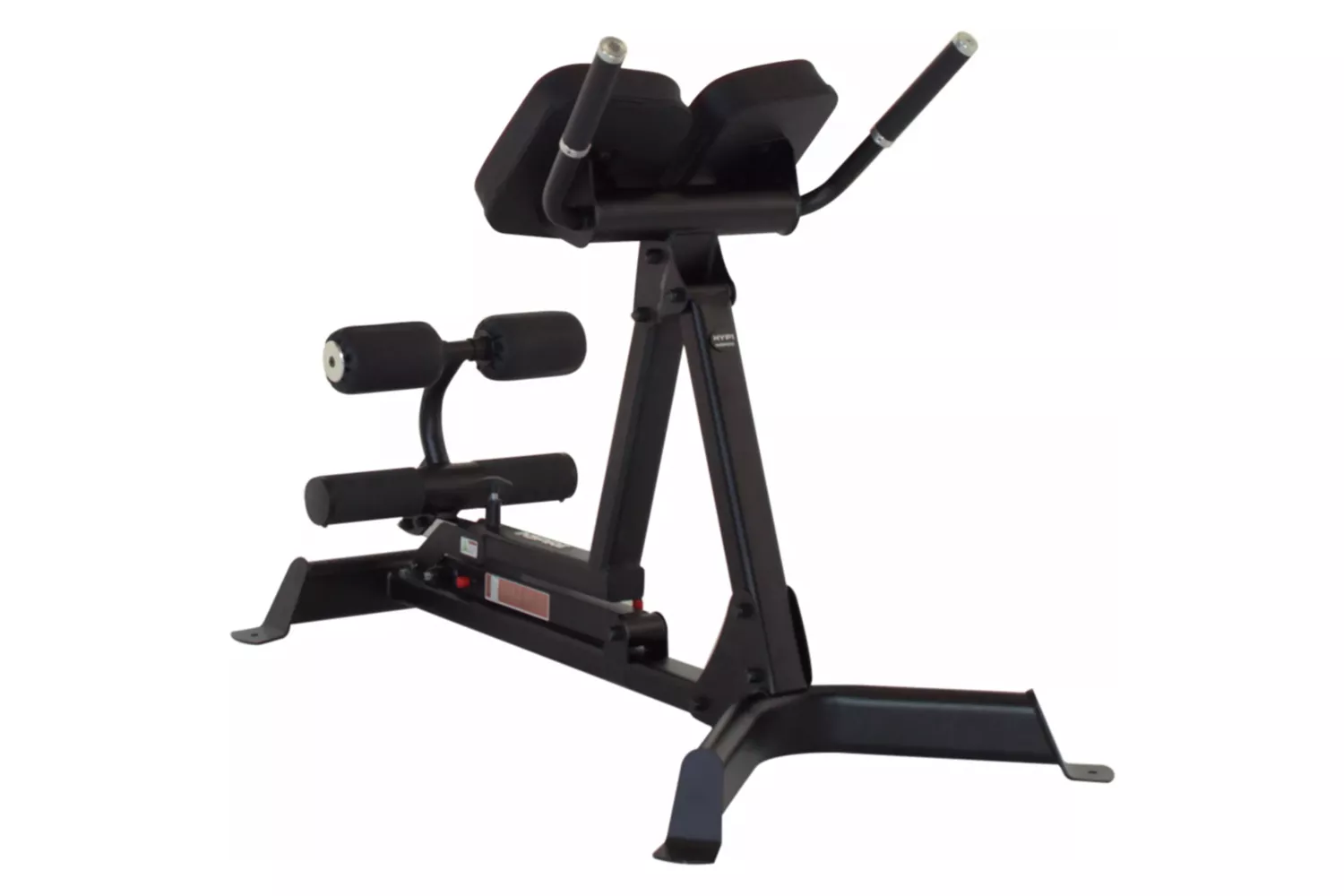
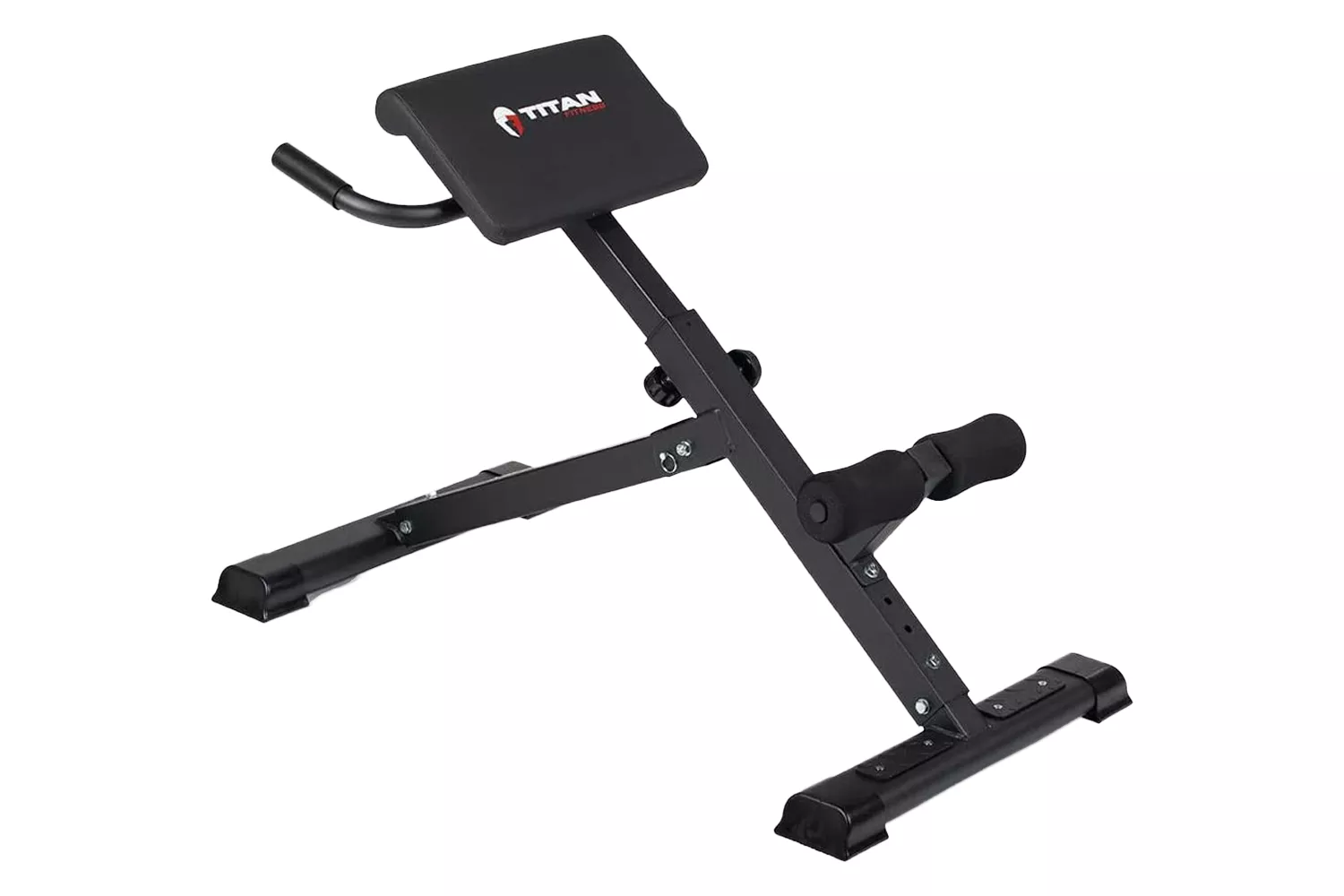
Understanding the biomechanics of a roman chair vs 45 degree back extension machine is essential for meeting your specific training goals. A 45 degree back extension machine is generally the gold standard for beginners or those in a rehabilitation phase. The angled orientation makes it easier to mount and dismount, and it reduces the peak shear force on the lower back while still providing effective erector spinae activation. It is the ideal tool for practicing a controlled hip hinge.
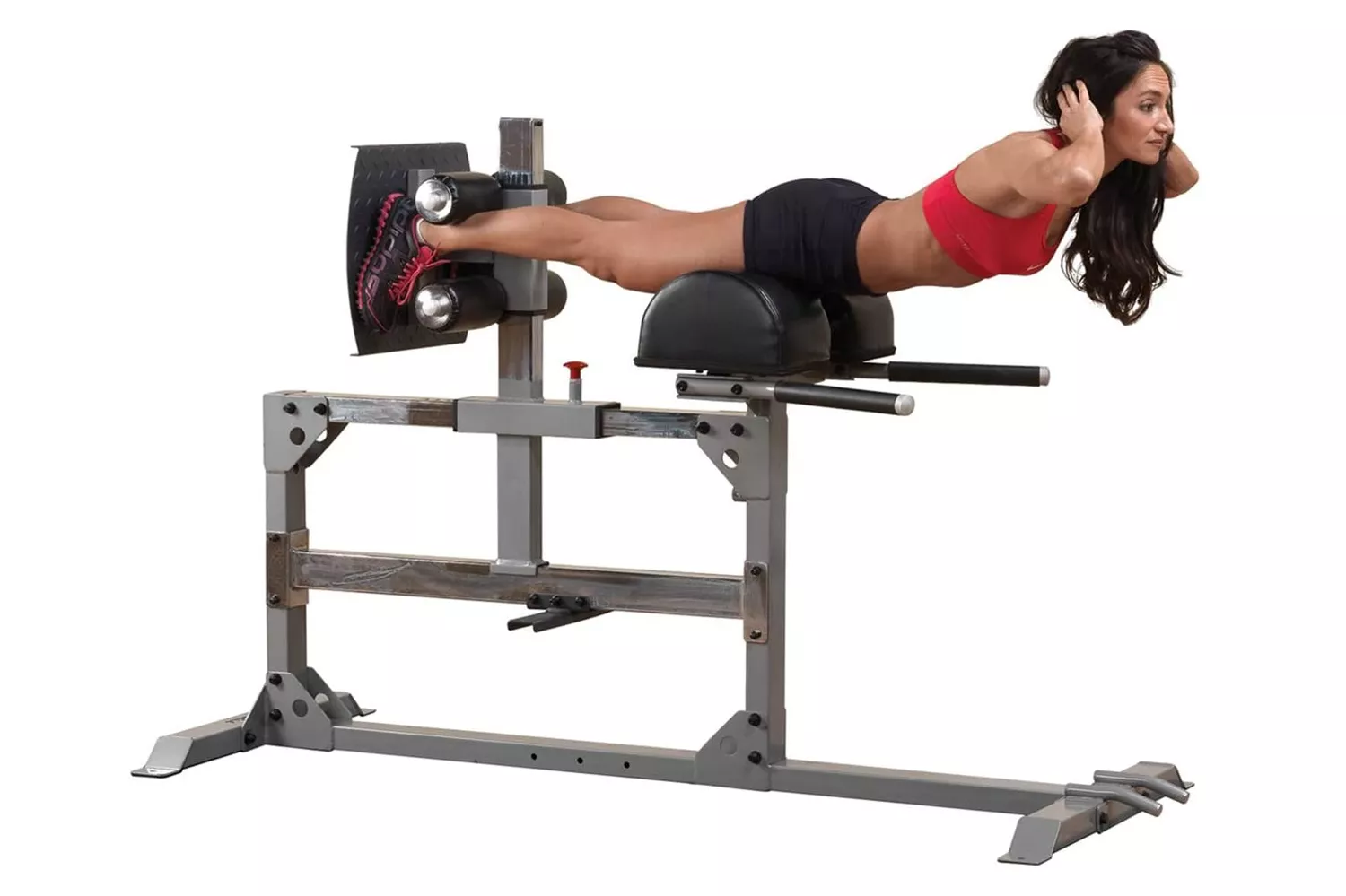
Conversely, a 90-degree Roman chair hyperextension bench is designed for high-intensity glute and hamstring work. Because your torso starts in a vertical hanging position, you have a significantly greater range of motion. This design is often referred to as a glute-ham developer in elite circles because of how aggressively it targets the posterior chain. If you are an advanced lifter looking for maximum muscular hypertrophy and core stability, the 90-degree variation will provide a much steeper challenge.
Detailed Reviews: The 7 Best Back Extension Machines of 2024
The shift toward home-based strength training is undeniable. Consumer search interest for home strength equipment grew twice as fast as search interest for cardiovascular equipment between 2011 and 2023. To help you navigate this crowded market, I have reviewed the seven top performers for this year.
1. Rogue Fitness GH-1 GHD — Best For Serious Strength Athletes
This is a commercial-grade beast. Built with 2x3-inch 11-gauge steel, it provides a rock-solid foundation that won't budge even during explosive movements. It serves as a true glute-ham developer, allowing for both back extensions and sit-ups.
- Steel Gauge: 11-gauge
- Max Weight: 500+ lbs
- Footprint: Large; non-foldable
2. Titan Fitness 45-Degree Hyperextension — Best For Beginners
If you are looking for a back extension machine for lower back strength and posture, this is your best bet. The 45-degree angle is ergonomic, and the split-pad design protects sensitive areas during the movement. It features high-density foam that holds its shape over time.
- Steel Gauge: 14-gauge
- Max Weight: 300 lbs
- Footprint: Moderate; easy to move
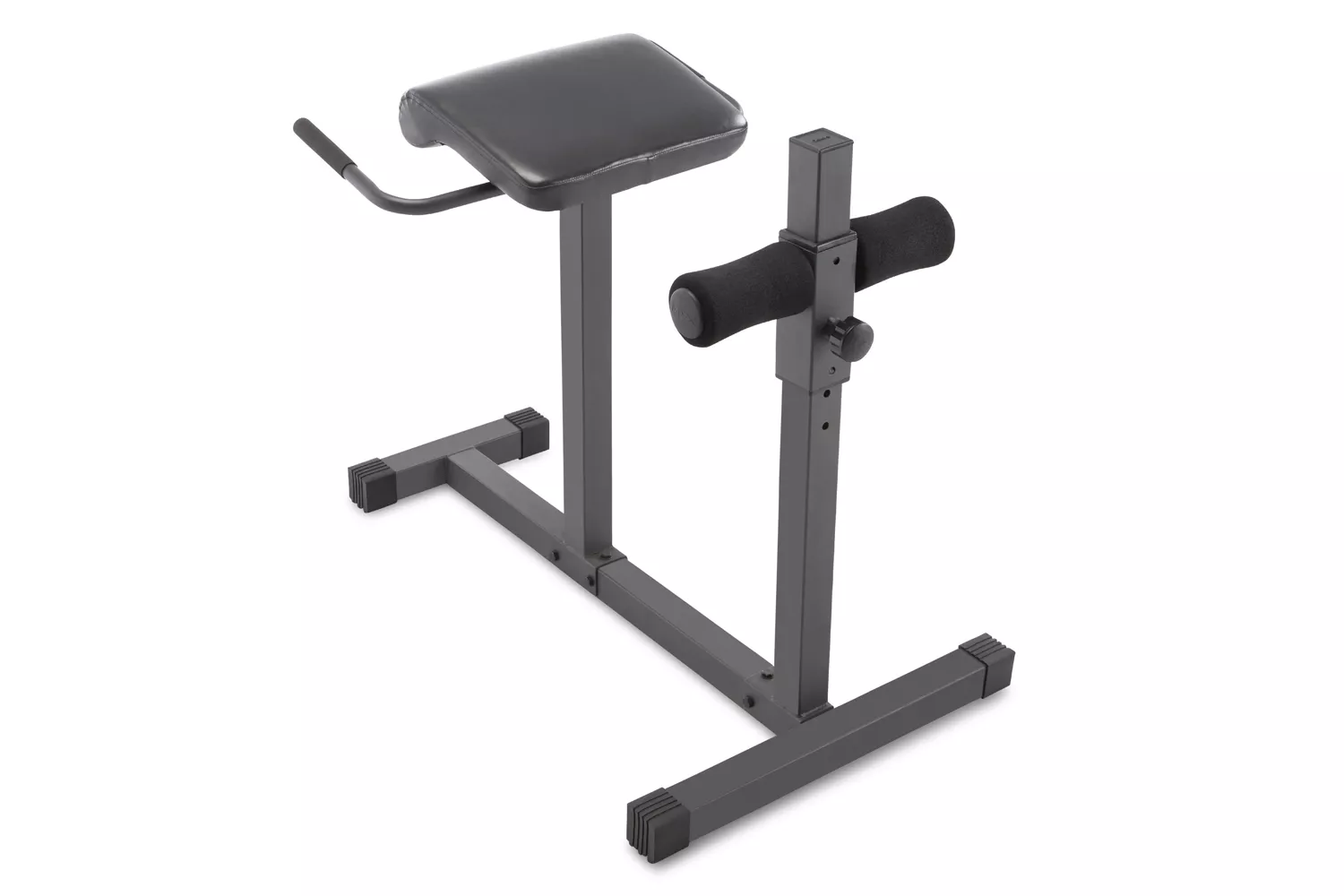
3. Marcy Roman Chair Bench — Best Budget Friendly Option
This is a budget friendly back extension machine for beginners that doesn't feel cheap. While it uses lighter steel than Rogue, it is perfectly adequate for standard home use. It’s lightweight and has a small footprint, making it ideal for a garage setup.
- Steel Gauge: 14-gauge
- Max Weight: 250 lbs
- Footprint: Compact
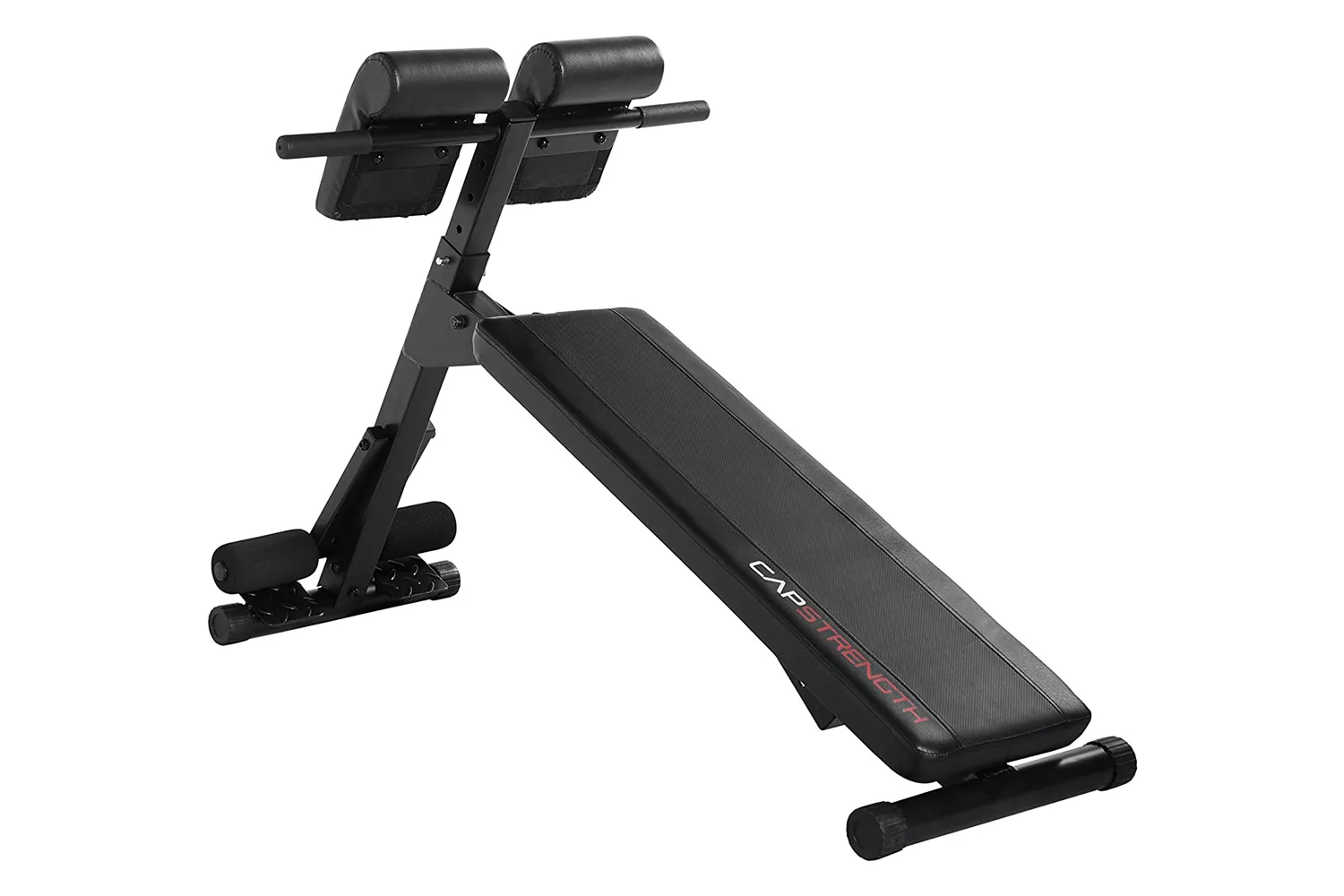
4. Stamina Hyper Bench Pro — Best Space-Saver
For those in tight quarters, this foldable back extension machine is a game-changer. It provides a stable hip hinge platform and then folds nearly flat to slide under a bed or into a closet. It is the most practical foldable hyperextension bench for small apartments available right now.
- Steel Gauge: 14-gauge
- Max Weight: 250 lbs
- Footprint: Foldable
5. Rep Fitness GHD — Best Multi-Functional Unit
Rep Fitness has created a machine that rivals commercial gym quality. This back extension machine for glutes and hamstrings workout features a bearing-based footplate adjustment system, making it incredibly easy to switch between users of different heights.
- Steel Gauge: 11-gauge
- Max Weight: 500 lbs
- Footprint: Large
6. Sunny Health & Fitness SF-BH620035 — Best for Lightweight Portability
This model is surprisingly sturdy for its weight. It is easy to assemble and features transport wheels, which are rare at this price point. It works exceptionally well for high-rep endurance work to build lower back resilience.
- Steel Gauge: 14-gauge
- Max Weight: 250 lbs
- Footprint: Compact/Foldable
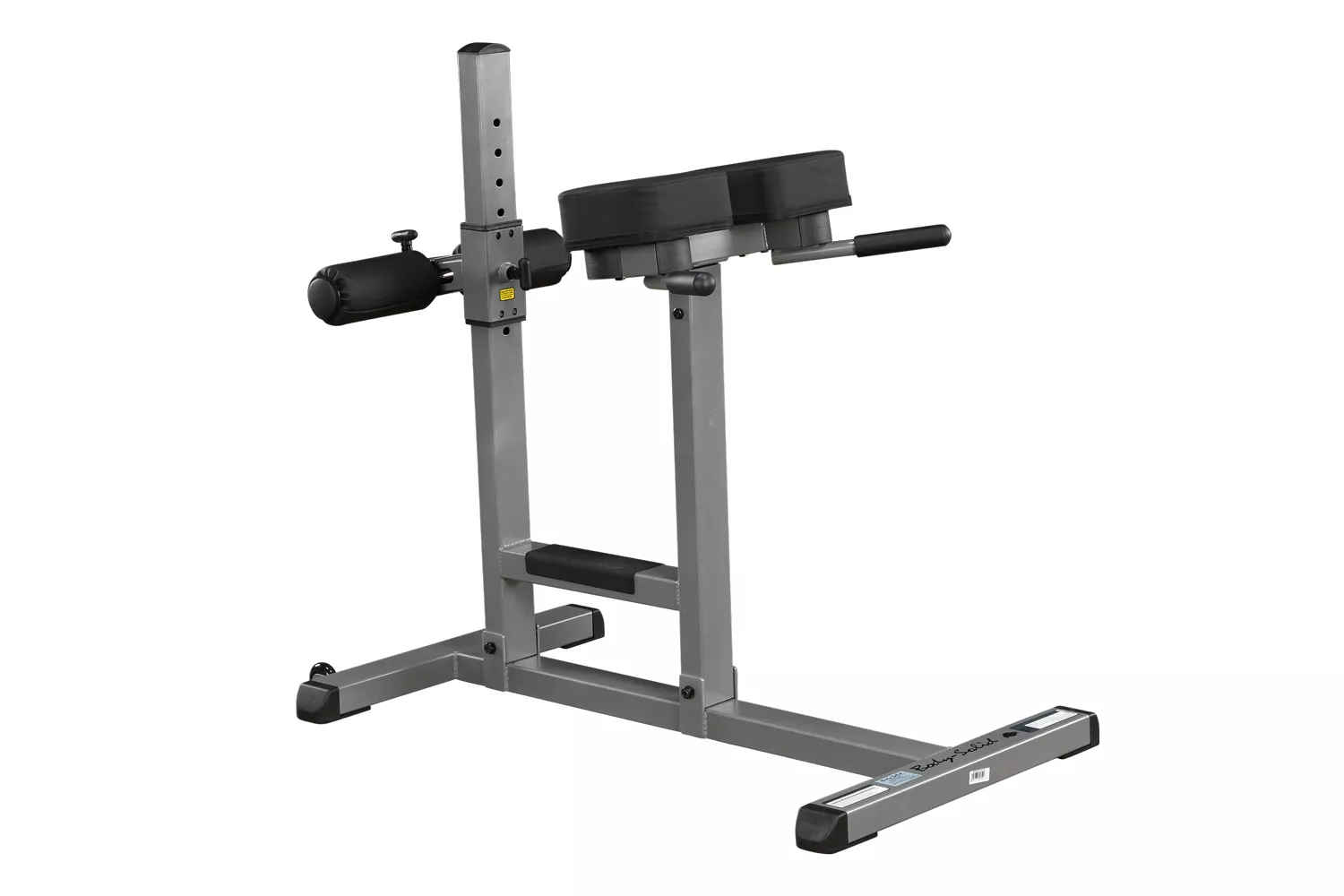
7. Body-Solid Powerline 45-Degree Hyperextension — Best Durability
Body-Solid is known for longevity. This machine features an extra-wide base to prevent any lateral wobbling during use. It is a no-frills, high-performance unit that focuses entirely on erector spinae development.
- Steel Gauge: 14-gauge
- Max Weight: 300 lbs
- Footprint: Moderate
Common Buying Mistakes & Safety Warnings
One of the most frequent mistakes I see is trainees purchasing machines with non-adjustable padding. If the hip pads are too high, they block your ability to hinge at the hip, forcing your spine to round. If they are too low, you lose the leverage needed to target the glutes effectively. Always ensure the hip and ankle supports can be tailored to your height.
Safety Warning: Avoid "ego lifting" on a hyperextension bench. Adding excessive weight before mastering the bodyweight movement can lead to lumbar strain. Always maintain a neutral spine and focus on the mind-muscle connection with your erector spinae rather than just moving the weight.
Furthermore, be wary of low-capacity frames that weigh under 30 pounds if you plan on using additional weights like dumbbells or plates. A lightweight frame can tip forward if the center of gravity shifts too far during a full range of motion. For weighted training, prioritize a machine with a wide base and a heavy steel gauge.
FAQ
What is the best back extension machine for home use?
The best back extension machine for home use is typically one that balances stability with a reasonable footprint. For most people, a 45-degree bench like the Titan Fitness model offers the best mix of safety, ease of use, and effectiveness for building the posterior chain without requiring a massive amount of floor space.
What is the difference between a 45-degree and a 90-degree back extension bench?
The primary difference is the angle and range of motion. A 45-degree machine is angled, making it easier to perform the movement with a focus on lower back health and rehabilitation. A 90-degree Roman chair or glute-ham developer starts with your body parallel to the floor, providing a much larger range of motion and putting more tension on the glutes and hamstrings.
What muscles do back extension machines work?
These machines primarily target the posterior chain, which includes the erector spinae (the muscles running along your spine), the gluteus maximus, and the hamstrings. They also engage the deep core muscles and the multifidus to maintain spinal alignment and stability during the movement.
Are back extension machines safe for the spine?
Yes, they are generally very safe if used with proper form. Unlike a deadlift, which places a vertical load on the spine, a back extension machine allows for a controlled hip hinge with minimal compressive force. However, it is vital to avoid overextending (arching) the back at the top of the movement, as this can pinch the vertebrae.
What should I look for when buying a hyper extension bench?
You should prioritize adjustability, steel gauge, and padding quality. Look for a frame made of 14-gauge steel or thicker and high-density foam padding to ensure comfort. Check that the hip pads and ankle rollers are adjustable to accommodate your height, and consider a foldable back extension machine if you have limited space in your home gym.
Start Strengthening Your Back Today
Choosing the right equipment is the first step toward a resilient, pain-free back. Whether you opt for a heavy-duty glute-ham developer or a space-saving foldable hyperextension bench for small apartments, the key is consistency. By integrating these movements into your routine 2-3 times per week, you will develop the posterior chain strength necessary to support heavy lifts and maintain better posture in your daily life.
Evaluate your space, set your budget, and select the machine that fits your current fitness level. There is no better way to bulletproof your spine than by mastering the hip hinge on a high-quality back extension machine.