Quick Facts
- Top Benefit: Studies show a 57.4% increase in foot muscle strength for those using minimalist footwear for daily activities over six months.
- Force Production: Research confirms that barefoot training leads to higher rates of force development during heavy lifts like deadlifts.
- Hypertrophy: Transitioning to zero drop footwear can increase the size of intrinsic foot muscles by approximately 7% to 10%.
- Stack Height Metric: Optimal minimalist shoes for gym environments typically feature a stack height between 4mm and 14mm.
- Safety Metric: A safe adaptation period requires a 3 to 6 month gradual transition to avoid overuse injuries.
- Core Comparison: While traditional sneakers provide cushioning, they often limit sensory input and biomechanical efficiency compared to barefoot or minimalist options.
Barefoot training improves stability and coordination by increasing tactile feedback and proprioception. Without the compression of traditional sneakers, the toes can splay naturally, creating a wider base for better balance during lifts. This practice strengthens intrinsic foot muscles and improves biomechanical efficiency across the kinetic chain.
Should you ditch your sneakers? Barefoot training is more than a trend; it's a science-backed method to improve proprioception and force production. In the world of high-performance athletics, we often obsess over the latest carbon-fiber plates or nitrogen-infused foams, but we forget the most sophisticated piece of equipment we own: the human foot. As a performance editor, I’ve seen athletes plateau because they’ve built a powerful engine on a weak chassis. This guide compares barefoot vs. sneakers for functional fitness to help you decide if stripping back is the key to your next PR.
The Footwear Spectrum: Barefoot vs. Minimalist vs. Sneakers
To understand which footwear is best for your workout, we have to look at the geometry of the shoe. The most critical metric I use is stack height—the amount of material between your foot and the ground. Traditional cross-trainers often have a stack height exceeding 20mm and a significant heel-to-toe drop, which can shift your center of mass forward and alter your natural gait.
In contrast, minimalist shoes for gym use are designed with the zero drop concept. This means the heel and the forefoot are at the same height, mimicking the natural stance of the human foot. When you move away from the heavy cushioning of traditional sneakers, you gain ground feel, which is essential for complex functional movements.
However, we must differentiate between being completely barefoot and wearing minimalist shoes. Training totally barefoot provides the purest sensory input, but hard gym floors aren't always forgiving. Choosing between barefoot and minimalist shoes depends on your environment and workout intensity. Minimalist shoes offer a compromise, providing a thin layer of protection and grip while allowing for the toe splay necessary for a stable base.
Footwear Comparison Table
| Feature | Barefoot | Minimalist Shoes | Traditional Sneakers |
|---|---|---|---|
| Stack Height | 0mm | 4mm – 14mm | 20mm+ |
| Heel-to-Toe Drop | 0mm | 0mm (Zero Drop) | 8mm – 12mm |
| Toe Box Width | Unlimited | Wide/Anatomical | Narrow/Tapered |
| Proprioception | Maximum | High | Low |
| Best For | Static lifts, Home gym | HIIT, Cross-training | Long-distance running |
When looking for the best minimalist shoes for functional fitness 2026, you should prioritize a wide toe box and a flexible sole. Traditional sneakers create a mechanical disadvantage in functional movement by dampening the signals your brain receives from the ground. By reducing that barrier, you move closer to the biomechanical efficiency our bodies evolved for.
Scientific Benefits: Why Ditch the Cushioning?
The shift toward barefoot training isn't just about aesthetics or "natural" living; it is about measurable performance gains. When you train without the crutch of thick foam, your body is forced to engage the intrinsic foot muscles—the small muscles within the foot that support the arch and stabilize the toes.
A landmark study in 2021 found that individuals who wore minimalist shoes for daily activities experienced an average 57.4% increase in foot muscle strength. In a functional fitness context, this strength translates directly to better balance and a more rigid lever for jumping and sprinting. Furthermore, research indicates that transitioning to this type of footwear can increase the cross-sectional area of these muscles by 7% to 10%.
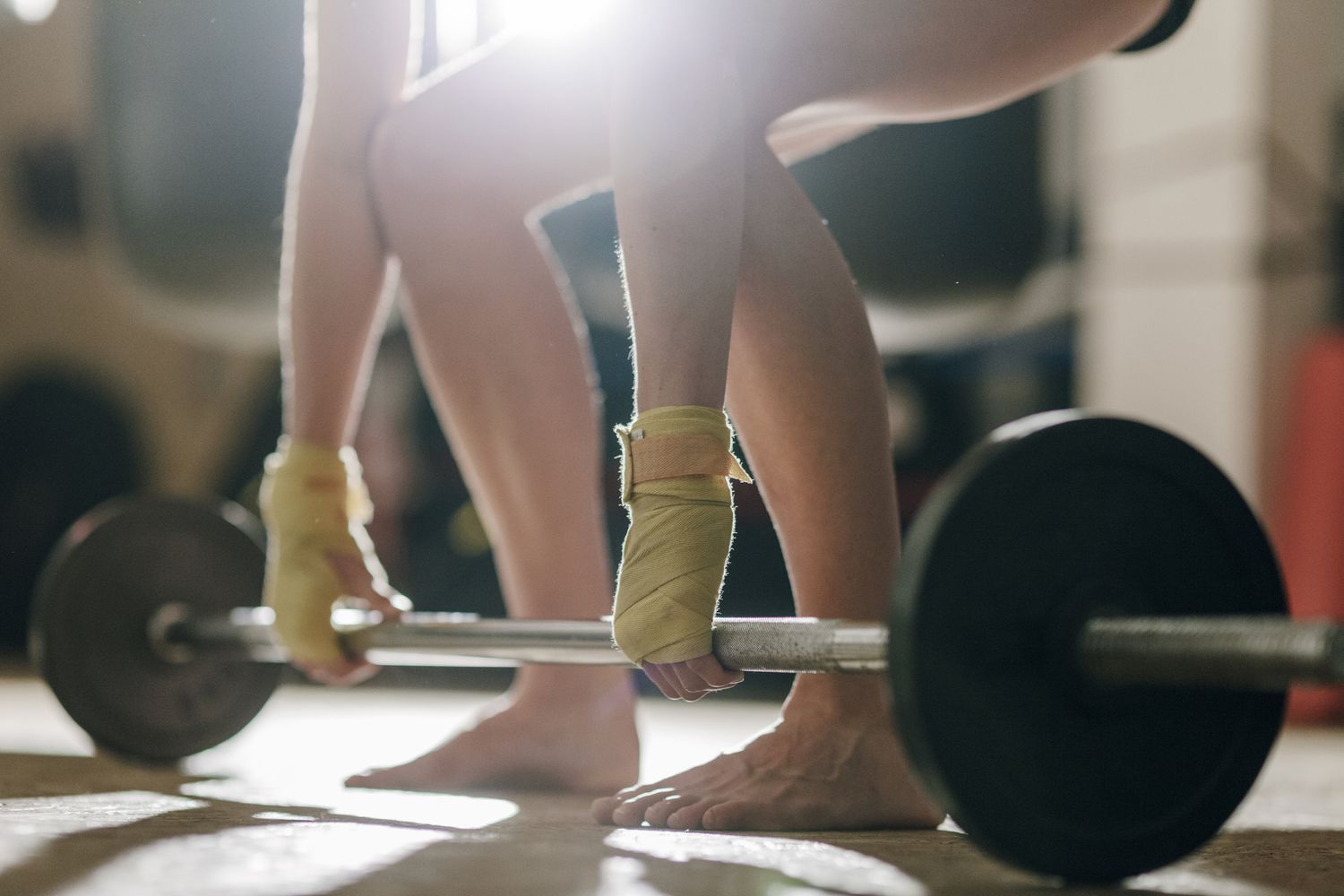
Is lifting weights barefoot better than sneakers? The data suggests yes, particularly for posterior chain movements. Studies have demonstrated that training barefoot leads to higher rates of force development and peak force during deadlifts. When your foot is in direct contact with the floor, there is no "energy leak" through a soft midsole. You can drive through the floor with more precision.
Beyond raw power, there is the benefit of improving ankle stability. Traditional shoes with high stack heights can increase the "lever arm" for an ankle sprain. By staying lower to the ground, you improve your somatosensory feedback—the body's ability to sense its position in space. This heightened proprioception allows for micro-adjustments during a heavy squat or a lateral box jump that a cushioned shoe would mask.
The Transition Roadmap: From Sneakers to Barefoot Safely
You cannot simply toss your cushioned sneakers in the trash and hit a high-volume HIIT session barefoot the next day. The benefits of training without shoes come with a prerequisite: an adaptation period. Your plantar fascia, Achilles tendon, and calf muscles have likely become "lazy" or shortened due to years of wearing elevated heels.
To understand how to transition to barefoot training safely, you need to follow a progressive protocol. If you rush the process, you risk stress fractures or bone marrow edema—a condition where fluid builds up in the bone due to repetitive impact it isn't prepared for.
The 10-Week Step-Down Protocol
- Weeks 1-2: Start by walking barefoot at home for 15-30 minutes daily. Focus on spreading your toes and feeling the floor.
- Weeks 3-4: Introduce foot strengthening exercises for barefoot beginners, such as "short foot" drills (scrunching a towel with your toes) and slow, controlled calf raises.
- Weeks 5-6: Transition to zero drop shoes vs traditional sneakers for HIIT during low-impact sessions. Use them for your warm-ups or upper-body days.
- Weeks 7-8: Begin performing static, compound lifts (squats and deadlifts) in minimalist shoes or barefoot. Avoid high-impact jumping yet.
- Weeks 9-10: Gradually introduce plyometrics and running, starting with very low volume on soft surfaces.
The risks of barefoot training on hard gym floors are real. Concrete covered by thin rubber provides zero shock absorption. For high-impact movements like jumping, minimalist footwear with a slight stack height (around 10-12mm) can help cushion joints while maintaining a natural foot position. This "middle ground" protects the kinetic chain while you build the necessary structural integrity.
Editor's Tip: Listen to your arches. If you feel persistent soreness in the center of your foot that doesn't resolve with rest, you are likely progressing too fast. The goal is long-term biomechanical efficiency, not an overnight transformation.
FAQ
Is barefoot training better than wearing shoes?
For functional fitness and strength training, barefoot training is often superior because it allows for better toe splay and higher force production. However, traditional shoes still have a place in long-distance running on pavement or for individuals with specific orthopedic conditions that require corrective orthotics.
How do I transition to barefoot training?
The safest way to transition is to start with short periods of barefoot walking at home. Gradually introduce minimalist shoes for low-intensity workouts before attempting heavy lifts or high-impact plyometrics. This process should ideally take 3 to 6 months for full adaptation.
Is it safe to lift weights barefoot?
Yes, it is generally safe and often recommended for lifts like squats and deadlifts as it provides a more stable base. However, you must be mindful of the risks of barefoot training on hard gym floors, such as slipping or lack of protection from dropped equipment. Always ensure the gym floor has adequate grip.
Does barefoot training improve balance and stability?
Barefoot training significantly improves balance and stability by enhancing proprioception. Without the cushioning of a sneaker, your brain receives clearer signals from the sensory receptors in your feet, allowing for faster and more accurate postural adjustments.
What are the risks of barefoot training?
The primary risks include overuse injuries like plantar fasciitis, Achilles tendonitis, or stress fractures if the transition is too rapid. Additionally, training completely barefoot in public gyms poses minor risks of fungal infections or foot injuries from heavy objects.
Should I use minimalist shoes for barefoot training?
Minimalist shoes are an excellent tool, especially when training in public environments. They provide the benefits of a zero drop platform and wide toe box while offering a layer of protection and grip that you don't get when training completely barefoot.
Summary and Recommendation
Footwear is a tool, and like any tool, it must be appropriate for the task. If your goal is to maximize force production, improve your kinetic chain health, and build a more resilient body, moving toward barefoot or minimalist training is a logical step. The data is clear: strengthening the feet through barefoot training leads to massive gains in intrinsic muscle strength and better stability across the board.
However, do not let enthusiasm override physiology. Take the time to follow a structured transition. Start with the basics, focus on ground feel, and gradually increase the intensity. Before you make a drastic change to your footwear, always seek a professional assessment to evaluate your biomechanical readiness before making the switch to barefoot training. This ensures your ankles, knees, and hips are prepared for the increased demand.