Quick Facts
- Statistic: Research indicates between 63% and 72% of the population wears shoes that do not correctly fit their foot dimensions.
- Fit Rule: Always aim for a half to a full size larger than your standard dress shoes to account for foot swelling.
- Key Measurement: Ensure there is a half-thumb width of space between your longest toe and the front of the shoe.
- Arch Identification: Use the wet test to determine if you have flat feet, high arches, or neutral arches before purchasing.
- Replacement Cycle: Most high-quality sneakers should be replaced every 300 to 500 miles or every six to twelve months.
- Consumer Priority: A 2024 footwear industry report found that fit and comfort are now the top criteria for buyers, even above price.
To follow a proper sneaker buying guide, start with a wet test for determining foot type for sneakers, measure your feet in the late afternoon to account for swelling, and ensure a half-thumb's width of space in the toe box. This approach ensures biomechanical alignment and prevents long-term foot fatigue.

Identifying Your Foot Type: The Wet Test Diagnostic
Before we look at aesthetics or brand names, we must understand the foundation. Your foot shape dictates how your body absorbs impact and moves through space. The most effective way to start choosing sneakers by foot type is the wet test for determining foot type for sneakers. Simply dampen the sole of your foot and step onto a piece of heavy paper or a brown paper bag. The resulting footprint reveals your arch height and, consequently, your support needs.
If your footprint shows nearly the entire sole, you likely have flat feet. This often leads to overpronation, where the foot rolls excessively inward during the gait cycle. To manage this, you should look into how to choose sneakers for flat feet and overpronation, specifically seeking out stability or motion control shoes. These models feature a medial post—a firmer piece of foam on the inside of the midsole—to prevent the arch from collapsing.
Conversely, if the footprint shows only the heel and the ball of the foot with a thin line on the outside, you have high arches. High arches are typically associated with supination, where the foot does not roll inward enough, placing stress on the outer edges. For this foot type, we recommend seeking the best sneakers for high arches and supination 2026, which prioritize neutral cushioning and flexible midsoles to maximize shock absorption and encourage a more natural roll.
| Foot Type | Arch Description | Biomechanical Tendency | Recommended Shoe Category |
|---|---|---|---|
| Flat Feet | Low or no visible arch | Overpronation (Inward roll) | Stability or Motion Control |
| Neutral Arches | Moderate, balanced arch | Neutral Pronation | Neutral Cushioning |
| High Arches | Distinct, high curve | Supination (Outward roll) | Neutral, Highly Cushioned |
Anatomy of Support: Midsoles, Drops, and Medial Posts
A sneaker is more than just fabric and rubber; it is a complex piece of engineering designed to maintain biomechanical alignment. When reviewing any sneaker support and cushioning guide, the most critical component to examine is the midsole. Most modern midsoles are made from Ethylene Vinyl Acetate (EVA) or Polyurethane (PU). The midsole foam density determines how much energy return you receive and how effectively the shoe provides shock absorption.
Another technical feature often overlooked by casual shoppers is the heel-to-toe drop. This refers to the difference in height between the heel and the forefoot. A higher drop (10mm to 12mm) often benefits those with Achilles tendon issues, while a lower drop (0mm to 4mm) promotes a midfoot or forefoot strike. Understanding these podiatrist tips for choosing supportive sneakers can be the difference between a productive workout and lingering plantar fasciitis relief.
For those requiring extra structure, the medial post is a life-saver. This technical addition consists of a denser material within the midsole that resists compression, effectively guiding the foot back into a neutral position. If you suffer from frequent foot fatigue, the issue might not be the weight of the shoe, but rather a lack of these specific support features that prevent your muscles from working overtime to stabilize your gait.
The Perfect Fit: Measuring and Sizing Rules
Many people assume they know their size because they have worn the same number for a decade. However, foot size can change due to age, weight fluctuations, and activity levels. To master how to fit sneakers properly, you must move beyond the number on the box and look at the actual volume and shoe last shape.
The gold standard for measurement is the Brannock device. This tool measures not just the length from heel to toe, but also the arch length and width. Arch length is particularly important because the shoe's flex point must align with the ball of your foot. If the shoe is the right length but the arch is too short, the shoe will bend in the wrong place, leading to discomfort.
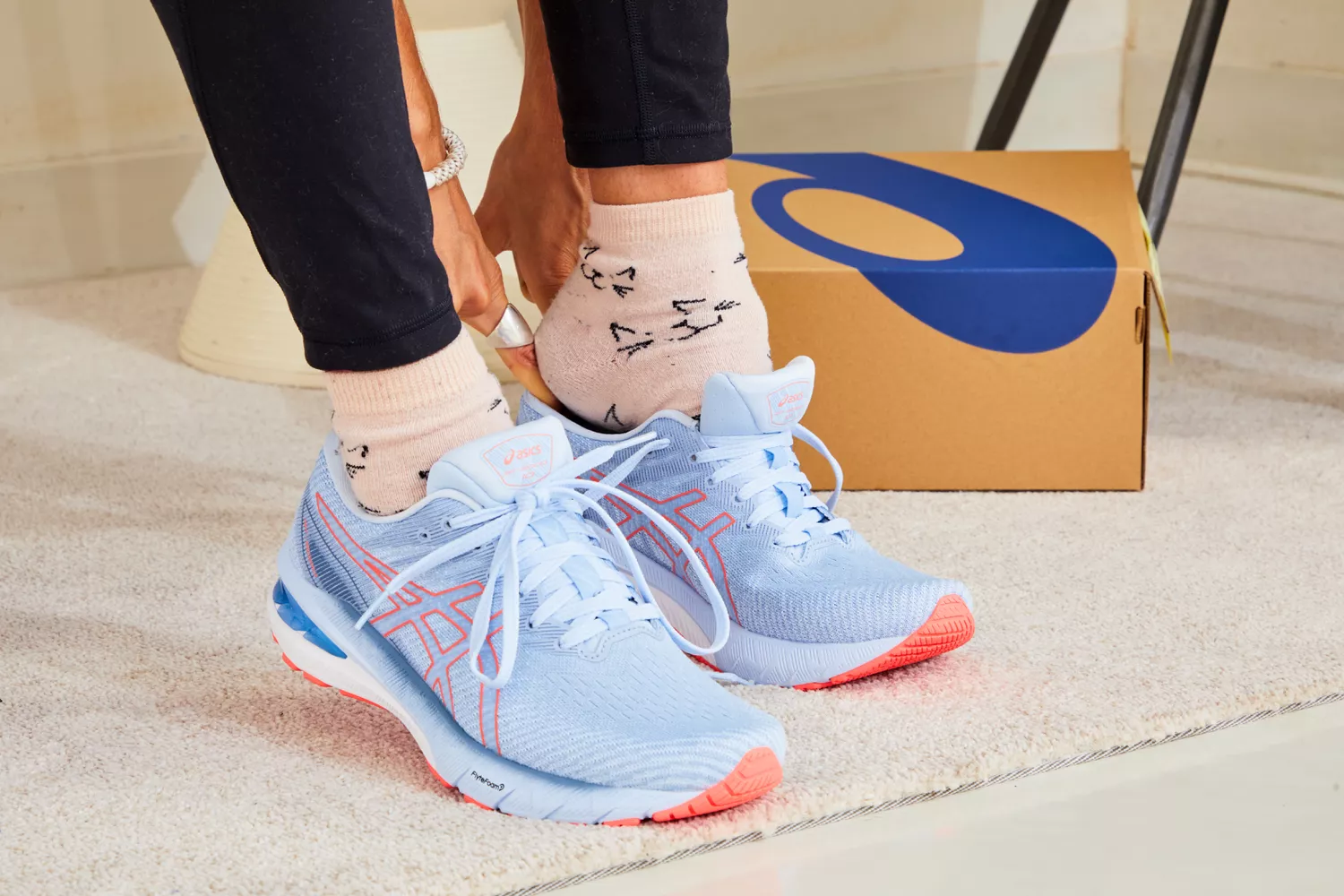
We always recommend the half-thumb rule: there should be about half an inch of space in the toe box. This is vital because your feet expand when you run or walk long distances. You must ask yourself: how much space should be in the toe box for my specific needs? If your toes feel cramped or cannot splay naturally, you risk developing blisters or black toenails. A wider toe box allows for better balance and stability by letting the forefoot expand upon impact.
Online Shopping Strategy: Getting it Right from Home
In an era where many of us are buying sneakers online, getting the right fit without a physical try-on can be challenging. The first step is to perform your measurement in the late afternoon. By this time, your feet have naturally swollen to their largest size, which mimics the state they will be in during a workout.
When browsing, pay close attention to the width codes. While most people default to a standard D (men) or B (women), many brands offer a range of widths from B (narrow) to 4E (extra-wide). If you consistently find that the sides of your feet feel squeezed, even if the length is correct, you likely need a wider shoe last shape. Reading user reviews for phrases like "runs small" or "narrow midfoot" can also provide a realistic preview of the shoe's internal volume.
Maintenance: When to Retire Your Sneakers
Even the best-engineered shoe has a functional lifespan. Most experts agree that sneakers lose their structural integrity every 300 to 500 miles. For a casual user walking 15 miles a week, this means replacement is necessary every six to eight months. Identifying the signs it is time to replace your sneakers is crucial for preventing injury.
Check the outsole traction regularly. If the tread patterns have worn smooth in certain areas, you are losing grip and altering your stride. However, the most dangerous wear is often invisible. Midsole foam density gradually breaks down and loses its ability to bounce back, a process known as "bottoming out." If you start feeling new aches in your knees or lower back, or if your feet feel unusually tired after a standard walk, it is likely that the shock absorption capabilities have been exhausted.
Expert Tip: To extend the life of your shoes, rotate between two different pairs. This allows the midsole foam to fully decompress and dry out between uses, which can increase the overall durability of both pairs.
FAQ
How do I choose the right sneaker for my foot shape?
Start by performing a wet test to identify your arch type. If you have flat feet, look for stability shoes with medial posts. For high arches, prioritize neutral cushioned shoes with plenty of flexibility. For neutral arches, a standard neutral shoe with moderate support is usually the best fit.
How do I find my correct sneaker size online?
Measure your feet in centimeters in the late afternoon and compare the measurement to the brand's specific size chart rather than relying on a general size. Check width options (B, D, 2E, 4E) and read reviews to see if the model runs narrow or wide relative to standard sizing.
Should you buy sneakers a half size larger?
Yes, most people should buy sneakers a half to a full size larger than their dress shoes. This provides the necessary space in the toe box for the feet to swell during activity and prevents the toes from hitting the front of the shoe, which can cause bruising or nail damage.
How often should you replace your everyday sneakers?
Most high-quality sneakers should be replaced every 300 to 500 miles. For those using them for daily walking or casual wear, this typically equates to every six to twelve months. If the midsole looks wrinkled or the outsole traction is worn flat, it is time for a new pair.
What is the difference between running and walking sneakers?
Running shoes are designed to handle the high-impact force of a runner's stride, typically featuring more cushioning in the heel and forefoot and higher breathability. Walking shoes are often heavier and more rigid, designed for a more consistent heel-to-toe rolling motion and lasting durability for slower, repetitive movements.