Quick Facts
- Benchmark: Expect 2.5-5kg lift increases every 4-6 weeks for most compound movements.
- Tech Advantage: Research shows data-driven lifters are significantly more consistent than non-trackers.
- Recovery Rule: Allow at least 72 hours for central nervous system recovery after testing max lifts.
- Hypertrophy Range: Aim for a training volume of 10-20 hard sets per muscle group weekly for growth.
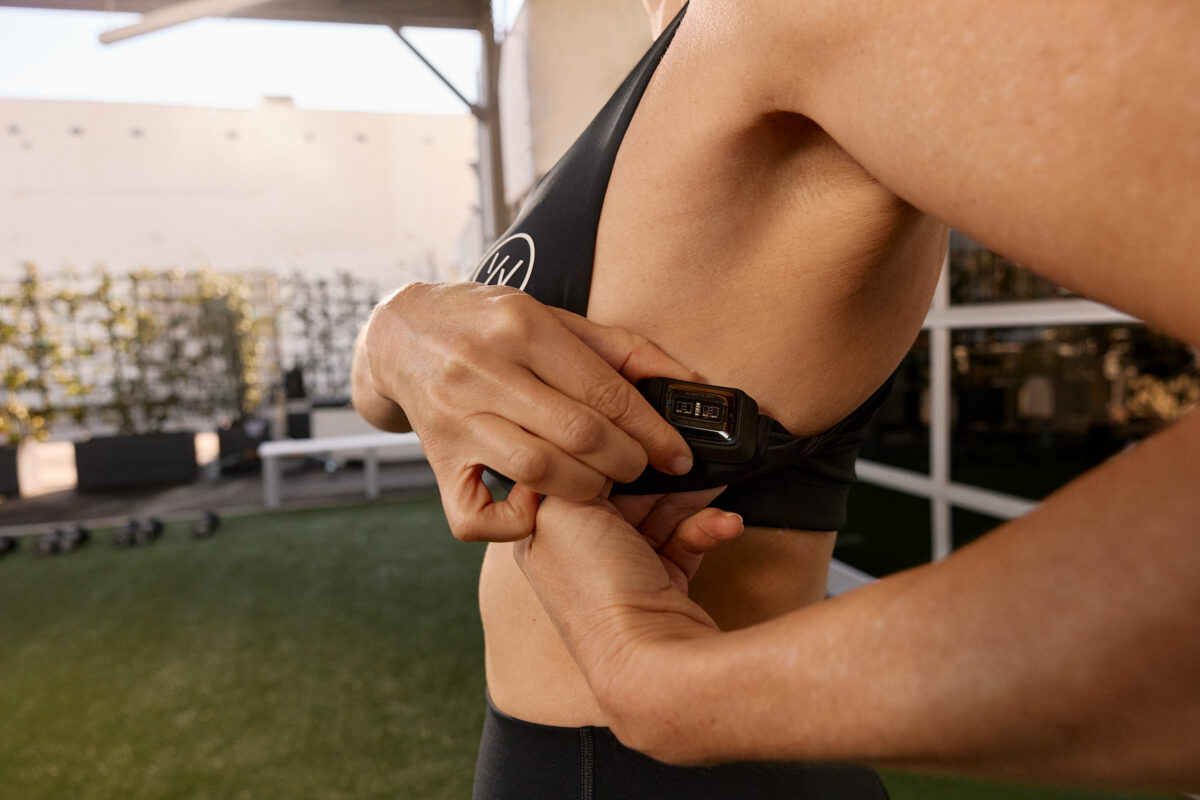
- Biofeedback: Always cross-reference your lifting numbers with sleep quality and heart rate variability to prevent burnout.
Effective methods for tracking strength progress involve logging every training session, including sets, repetitions, weight, and rest intervals. Utilizing both manual logs and digital apps allows lifters to monitor training volume and intensity while managing central nervous system fatigue to ensure long-term performance gains.
The Evolution of Strength Tracking in 2026
If you are stepping into a squat rack in 2026 without a data strategy, you are essentially training blindfolded. We have moved far beyond the era of just trying to add another plate to the bar every session. Today, elite performance is about quantified specificity. The landscape has shifted from simple weight logs to holistic performance ecosystems. This evolution is driven by our understanding of the adaptation timeline. When you start a new program, your initial gains are largely neural. Your brain is getting better at recruiting muscle fibers. Only after several weeks do we see significant muscle hypertrophy, which is the structural change in the muscle tissue itself.
By tracking strength progress with modern precision, you can distinguish between these neural adaptations and actual tissue growth. This distinction is vital for long-term planning. The global strength training devices market is projected to reach $6.2 billion by 2032, reflecting a massive shift toward tech-enhanced training. Whether you are focusing on the big three lifts or specialized accessory movements, the goal remains the same: using data to drive your periodization models. Evaluating strength training results beyond the scale is now the industry standard for anyone serious about athletic longevity.
Essential Metrics: Manual Logs vs. AI-Driven Apps
The debate over how to record strength training workouts manually vs using apps often comes down to personal preference, but the data tells a compelling story. Research indicates that individuals who utilize data-driven fitness technology maintain their exercise routines 37% longer than those who do not track their progress. Manual logs offer a tactile connection to your training and require no battery life, making them great for focus. However, AI-driven fitness tracking apps provide instantaneous calculations of training volume load and training density that are nearly impossible to do by hand mid-workout.
| Feature | Manual Paper Logs | AI-Driven Fitness Apps |
|---|---|---|
| Data Entry Speed | Moderate | High (with automation) |
| Volume Calculations | Manual/Time-consuming | Automatic and Instant |
| Fatigue Monitoring | Subjective notes | Data-driven (HRV/Velocity) |
| Distraction Level | Very Low | Moderate (Phone usage) |
| Long-term Trends | Difficult to visualize | Interactive charts/graphs |
When monitoring training volume and intensity for optimal performance, you need to track more than just the weight on the bar. You must account for the total tonnage moved and the rest intervals between sets. Shortening a rest interval while keeping the weight the same is a form of progress that many lifters ignore because it doesn't result in a new "max" number.

Mastering the One rep max testing protocol
To know where you are going, you have to know where you stand. A standardized one rep max testing protocol is the gold standard for measuring absolute strength. However, testing your true 1RM every week is a recipe for injury and central nervous system fatigue. In 2026, we prioritize estimated one rep max (e1RM) for daily tracking and reserve actual max testing for the end of a training block.
For those new to the platform, a safe one rep max testing protocol for beginners involves finding a 3-rep or 5-rep maximum. Once you have a solid 5-rep max, you can use a standard formula to estimate your 1RM with high accuracy without the high injury risk of a true maximal attempt.
The Protocol for Testing
- General Warm-up: 5-10 minutes of light cardio followed by dynamic mobility.
- Specific Warm-up: Perform the movement with an empty bar for 2 sets of 10.
- Build-up Sets: Gradually increase weight over 4-5 sets, dropping repetitions until you are performing singles at roughly 90% of your expected max.
- The Attempt: Take your shot at the new weight.
- Rest: Ensure 3-5 minutes of rest between the heaviest sets to allow for full ATP replenishment.
Advanced lifters may also integrate barbell velocity tracking into this protocol. By measuring how fast the bar moves at sub-maximal loads, you can predict your 1RM for the day without ever having to strain under a maximal load. This is the peak of measuring weightlifting gains with modern science.
Training Biofeedback: The Lifter’s Internal Radar
Data isn't just about what's happening on the barbell; it's about what's happening in your body. This is where training biofeedback for lifters becomes essential. Even the best program on paper can fail if you are not interpreting training biofeedback for recovery and fatigue management correctly. We use two primary subjective metrics: Rate of Perceived Exertion (RPE) and Reps in Reserve (RIR).
An RPE of 10 means you could not have done another rep or added any more weight. An RPE of 8 (or 2 RIR) means you had two solid reps left in the tank. Tracking these numbers allows you to adjust your training intensity based on your daily readiness. If your program calls for an RPE 8 squat at 300 lbs, but 300 lbs feels like an RPE 10 today, your biofeedback is telling you that your rate of recovery is lagging.
The Daily Readiness Checklist
- Sleep Quality: Did you get 7-9 hours of restorative sleep?
- Mood/Motivation: Are you eager to train, or does the idea feel like a chore?
- Joint Soreness: Is it standard muscle soreness or deep joint ache?
- Appetite: Are you fueling properly, or has your hunger plummeted?
It is worth noting that a survey of more than 1,800 fitness tracker users found that approximately 45% of individuals experience anxiety or stress as a result of the pressure to meet activity goals recorded by their devices. Use the data as a tool, not a master. If the metrics are causing more stress than progress, it is time to simplify your tracking.

Solving the Plateau: Progressive Overload & Deloads
The ultimate goal of tracking strength progress is to ensure you never stop moving forward. When your data shows a stagnation in your training volume load for three consecutive weeks, you have hit a plateau. This is where progressive overload tracking for weightlifting plateaus becomes your primary diagnostic tool.
Progressive overload is not just about adding weight. You can achieve it by:
- Increasing the total number of repetitions with the same weight.
- Adding more sets to increase total volume.
- Decreasing rest intervals to improve work capacity.
- Improving exercise technique and range of motion.
- Increasing the frequency of training sessions.
If you have exhausted these methods and the numbers are still stagnant, your data is likely signaling the need for a deload week. A deload is a scheduled reduction in intensity and volume—typically 50-60% of your normal volume—designed to let your central nervous system fatigue dissipate while maintaining your skill level in the movements. Without accurate logs, most lifters wait until they are injured or completely burnt out before they deload. With a data-driven approach, you can schedule your deloads proactively, ensuring that you are always training in an optimal state for muscle hypertrophy and strength.
FAQ
How do you track strength training progress?
You track progress by keeping a detailed log of every training session. This includes the date, the specific exercises performed, the weight used for every set, the number of repetitions completed, and the rest intervals between sets. Additionally, recording subjective data like the Rate of Perceived Exertion helps you understand the quality of those sessions relative to your physical state.
What metrics should I track for strength training?
The most critical metrics include training volume load (weight x reps x sets), intensity (percentage of 1RM or RPE), and training density (work per unit of time). You should also monitor recovery-related metrics such as sleep duration, resting heart rate, and overall energy levels to ensure your training volume does not exceed your capacity to recover.
Is it better to track weight or reps for strength?
For absolute strength, tracking the weight on the bar is primary, but for long-term progress, both are essential. Tracking reps allows you to see improvements in muscular endurance and work capacity, which eventually lead to the ability to lift heavier weights. A common method is to increase reps until you reach the top of a target range, then increase the weight and start at the bottom of the rep range again.
How do I know if I'm getting stronger?
You know you are getting stronger when your estimated one rep max increases, when you can perform more repetitions with a previously heavy weight, or when a specific weight feels easier (lower RPE) than it did previously. Improvements in your technique and the ability to maintain form under heavy loads are also clear indicators of increased strength.
What is the most effective way to log workouts?
The most effective way is the one you will consistently use. AI-driven fitness tracking apps are generally superior for analyzing long-term trends and calculating volume automatically. However, if a smartphone is a distraction in the gym, a simple notebook is highly effective for immediate data entry, which can then be transferred to a spreadsheet or app for deeper analysis later.
To reach your goals in 2026, you must stop treating your training like a hobby and start treating it like a science. By implementing a rigorous system for tracking strength progress, utilizing a proper one rep max testing protocol, and respecting your training biofeedback for lifters, you ensure that every drop of sweat in the gym results in a measurable gain. Consistency is king, but data is the crown. Log your lifts, analyze your trends, and let the numbers guide you to your strongest self.